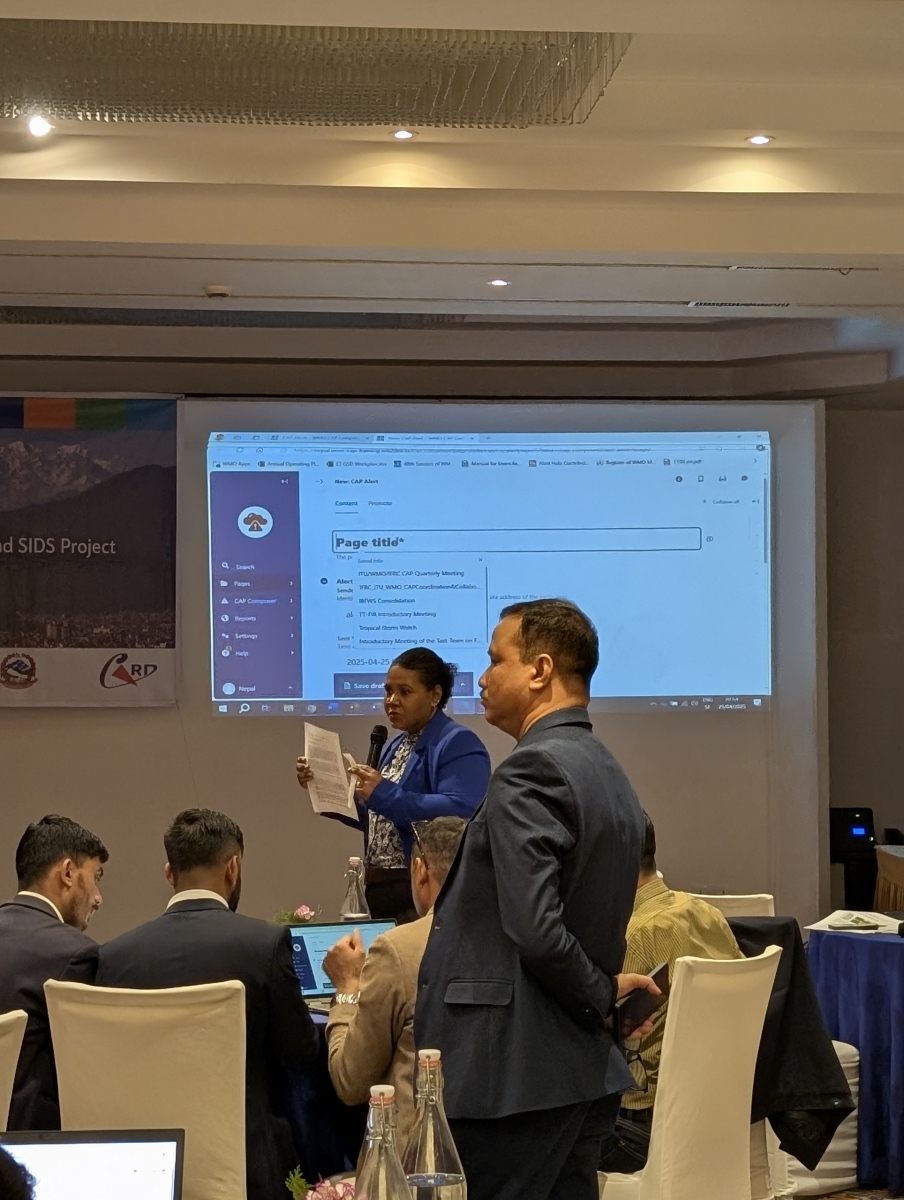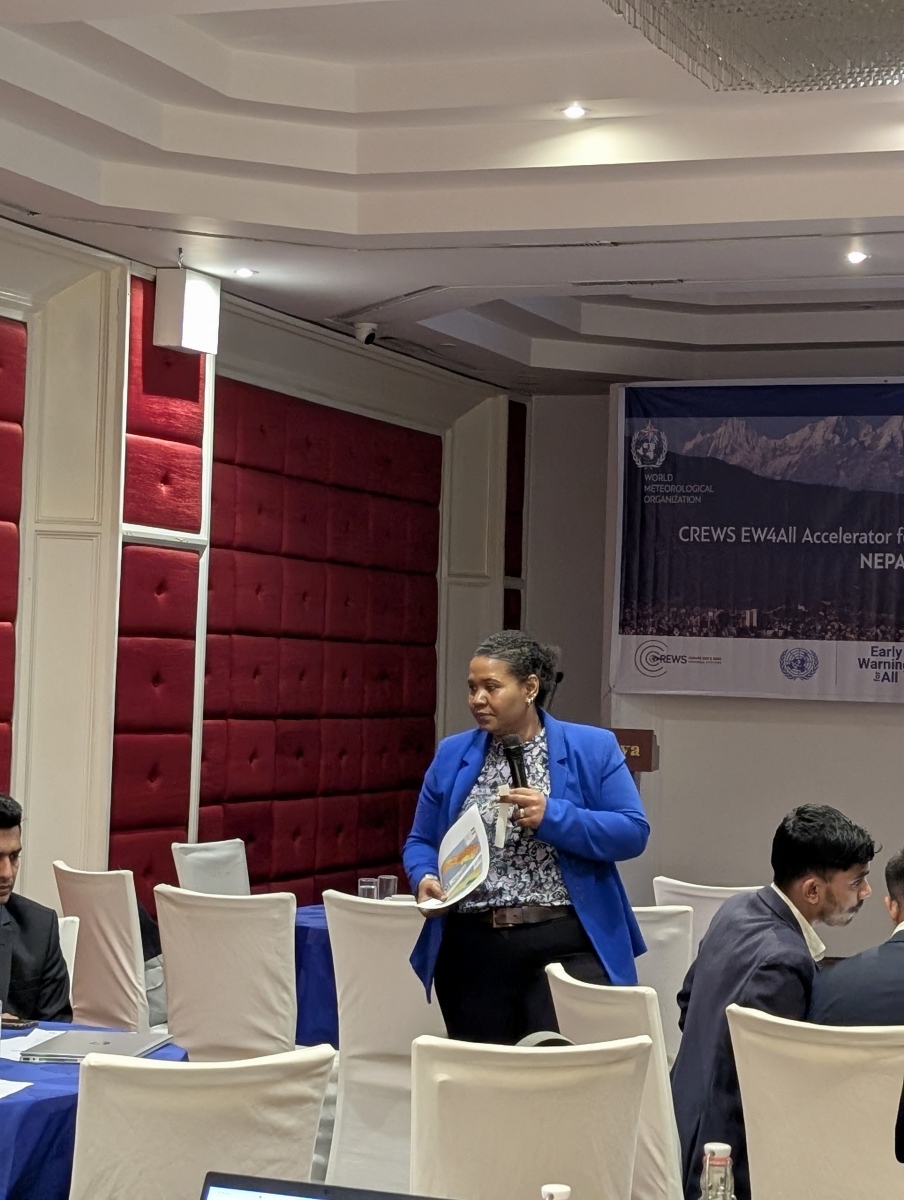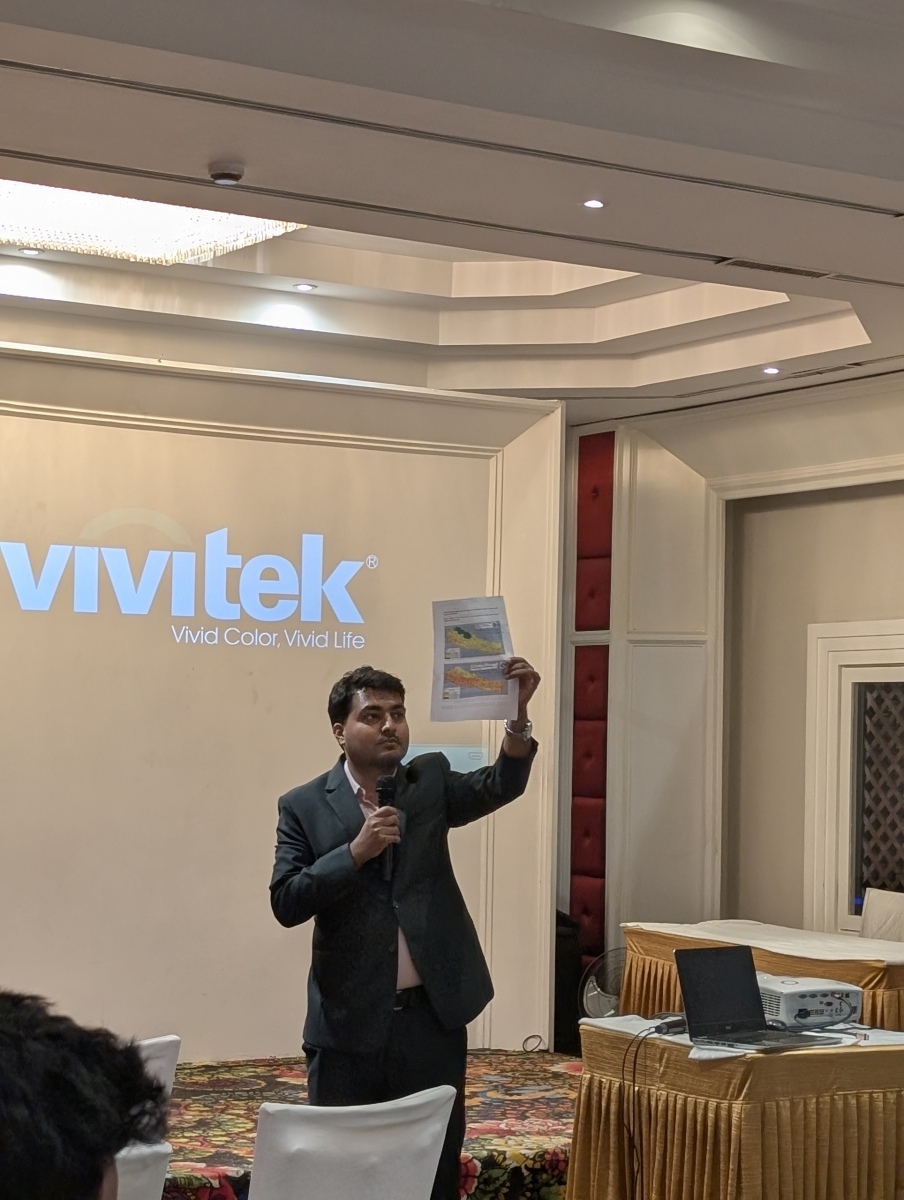
Central for Applied Research and Development (CARD)
Pulchowk, Lalitpur
Pulchowk, Lalitpur
Introduction
At the Nineteenth World Meteorological Congress (Cg-19) ,2023 the Common Alerting Protocol (CAP) standard was endorsed as a recommended practice for the routine dissemination of alerts and is now included in the Technical Regulations, Volume I (WMO-No. 49). The CAP standard caters to all types of emergencies and is designed for all media, all hazard communications to anyone. CAP messages focus on the type of event, urgency, certainty and severity. The Common Alerting Protocol (CAP) standard is being implemented globally by the WMO to support the National Meteorological and Hydrological Services (NMHSs). Timely and effective warning information allows for better preparation and adaptation to hazardous events, hence reducing losses. Some of the benefits of CAP include the (1) Ease and consistency at which alerts can be communicated to target users, (2) Standardization of alerts from many sources for situational awareness and pattern detection, and (3) Compatibility with new technologies and existing formats.
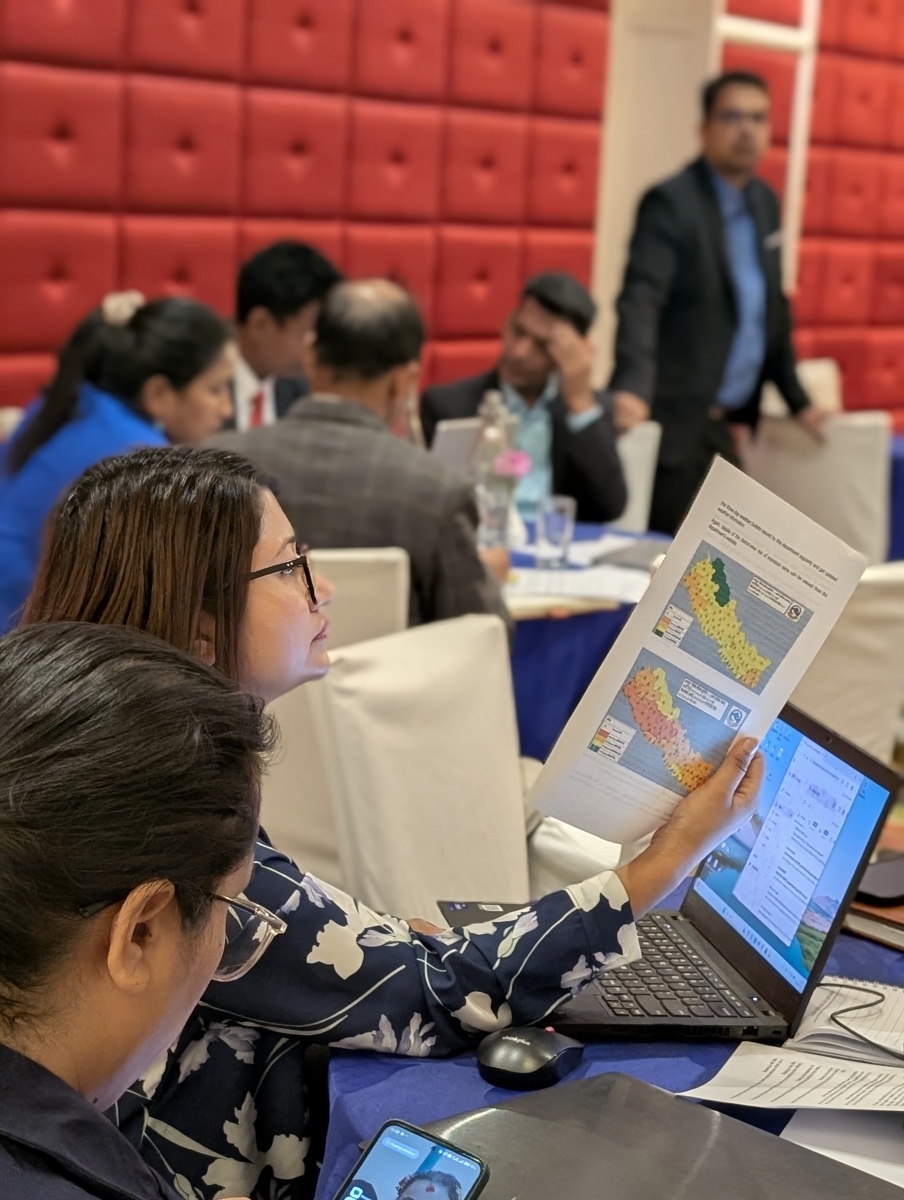
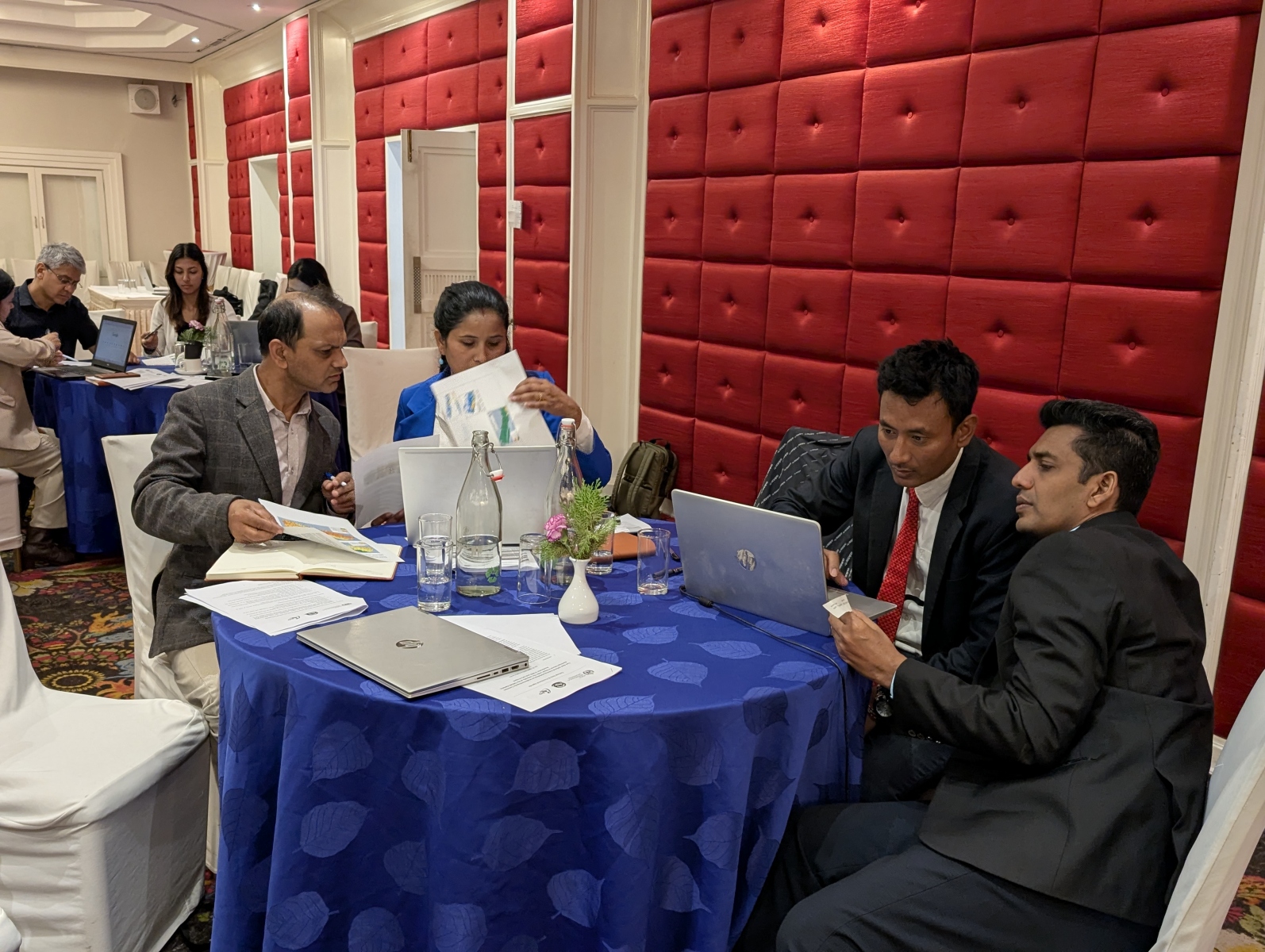
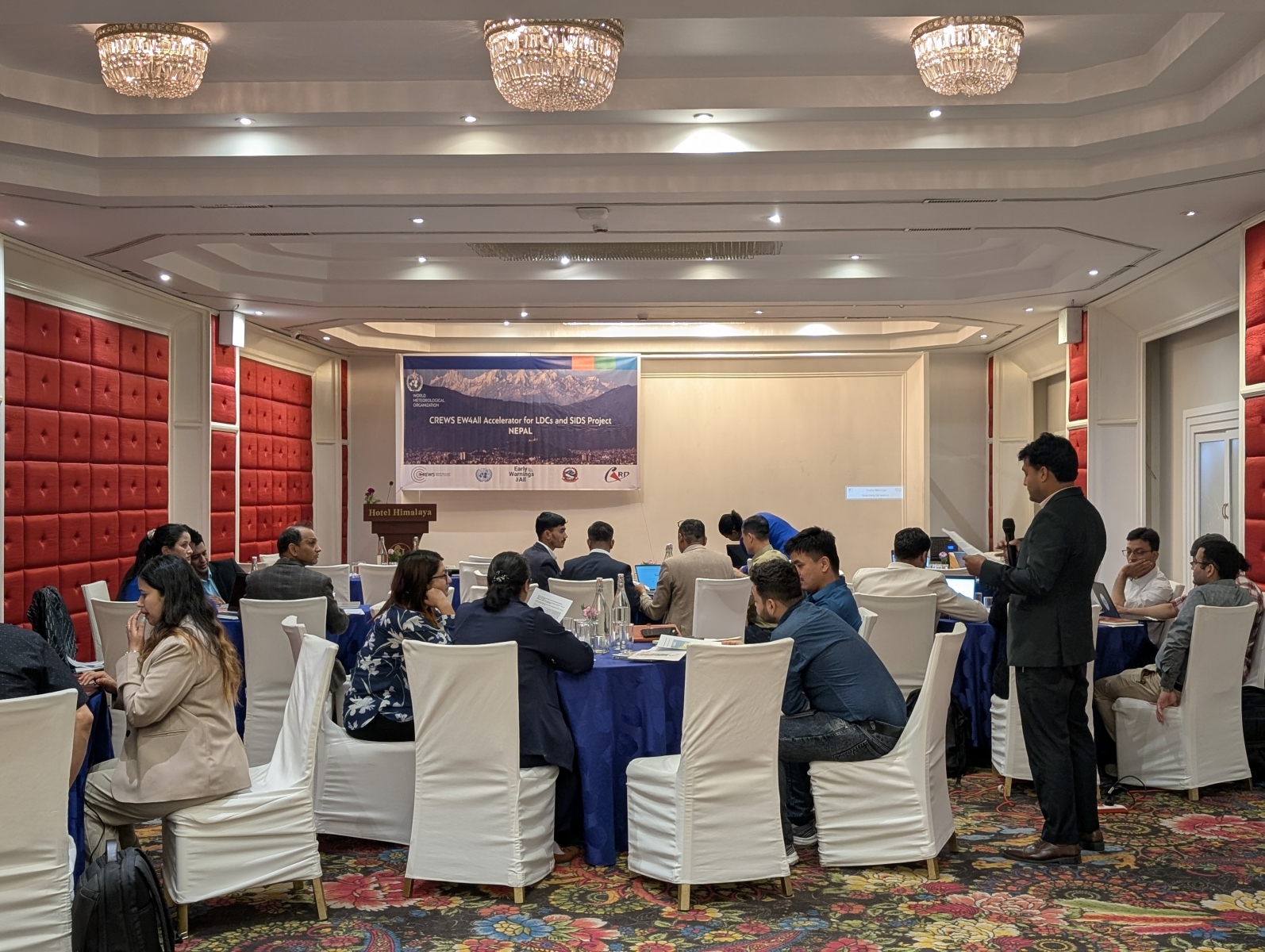
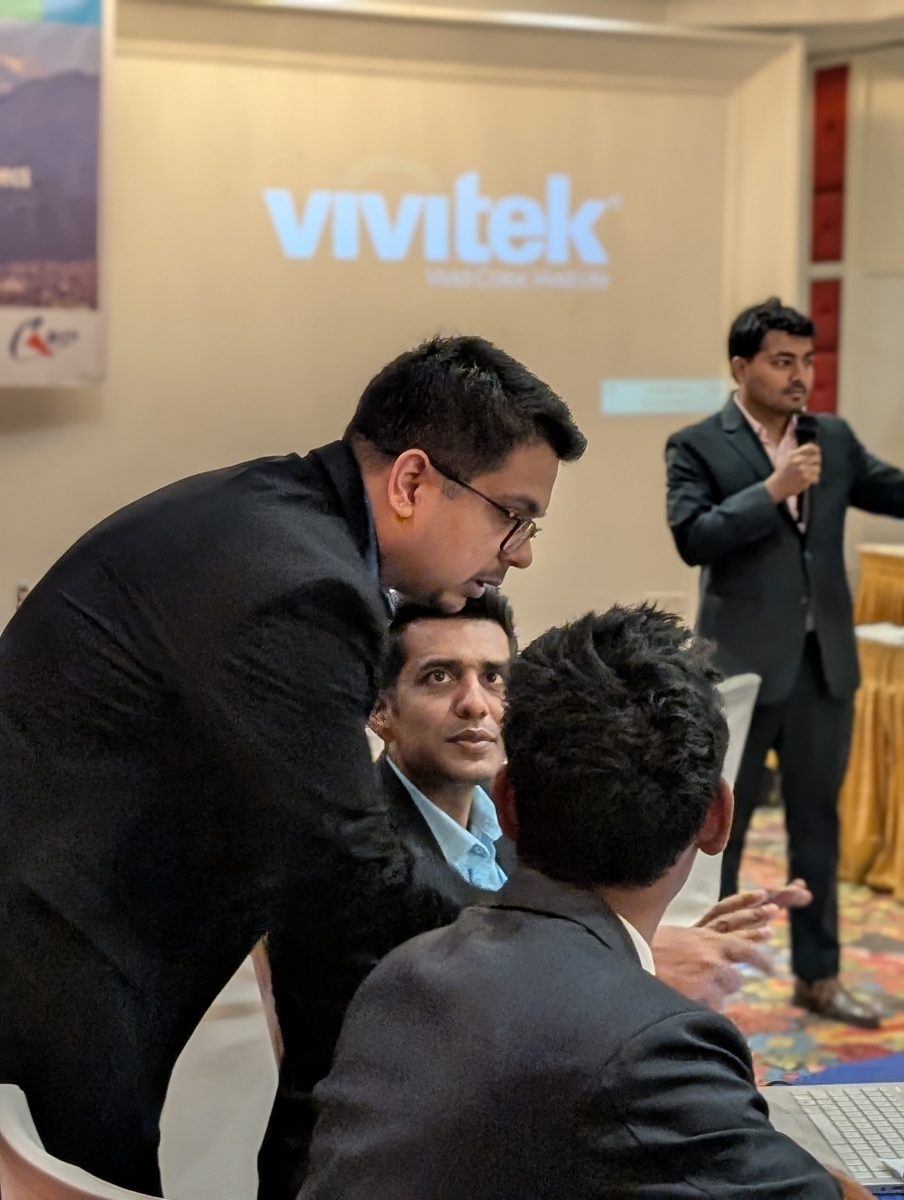
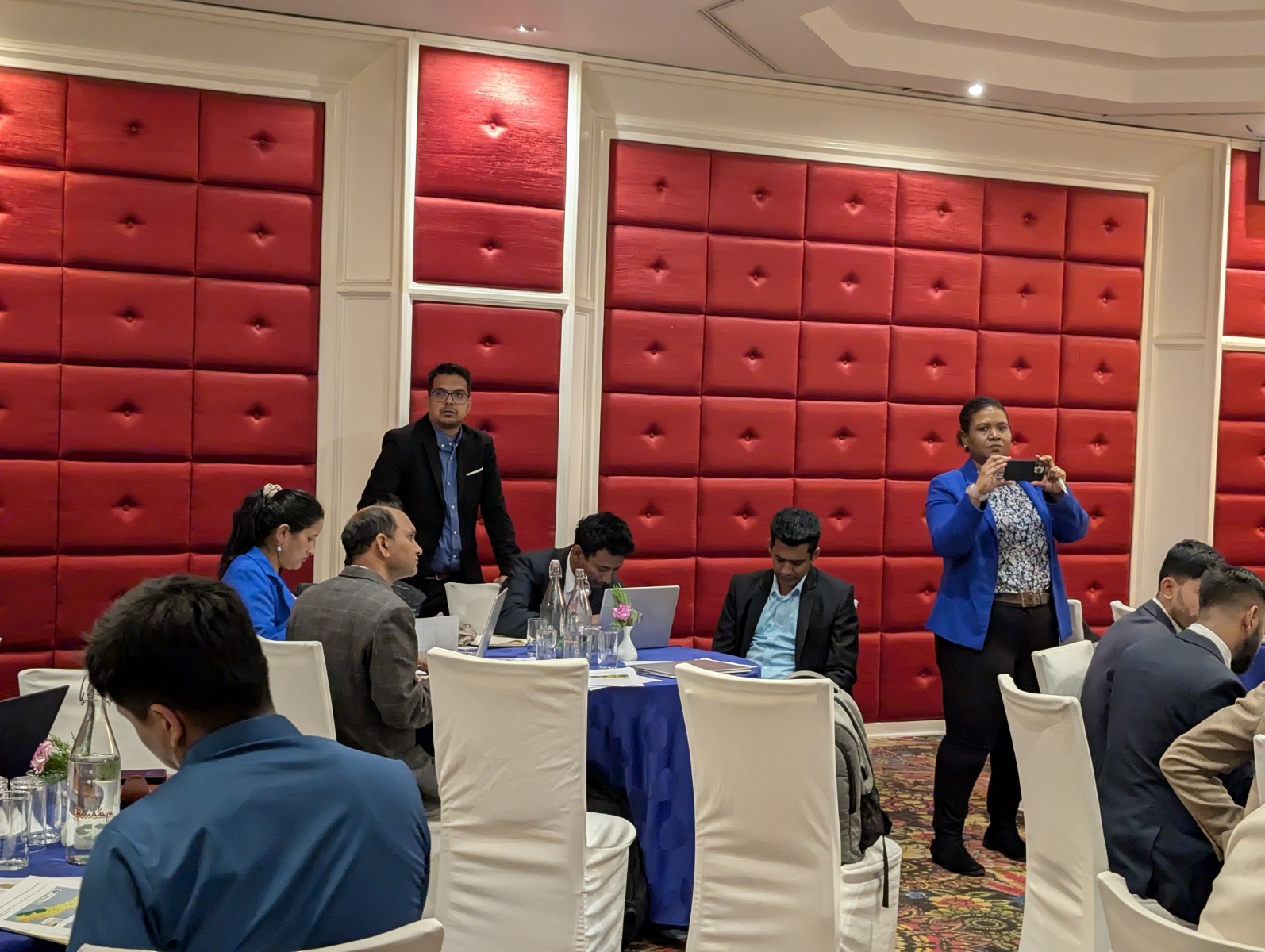
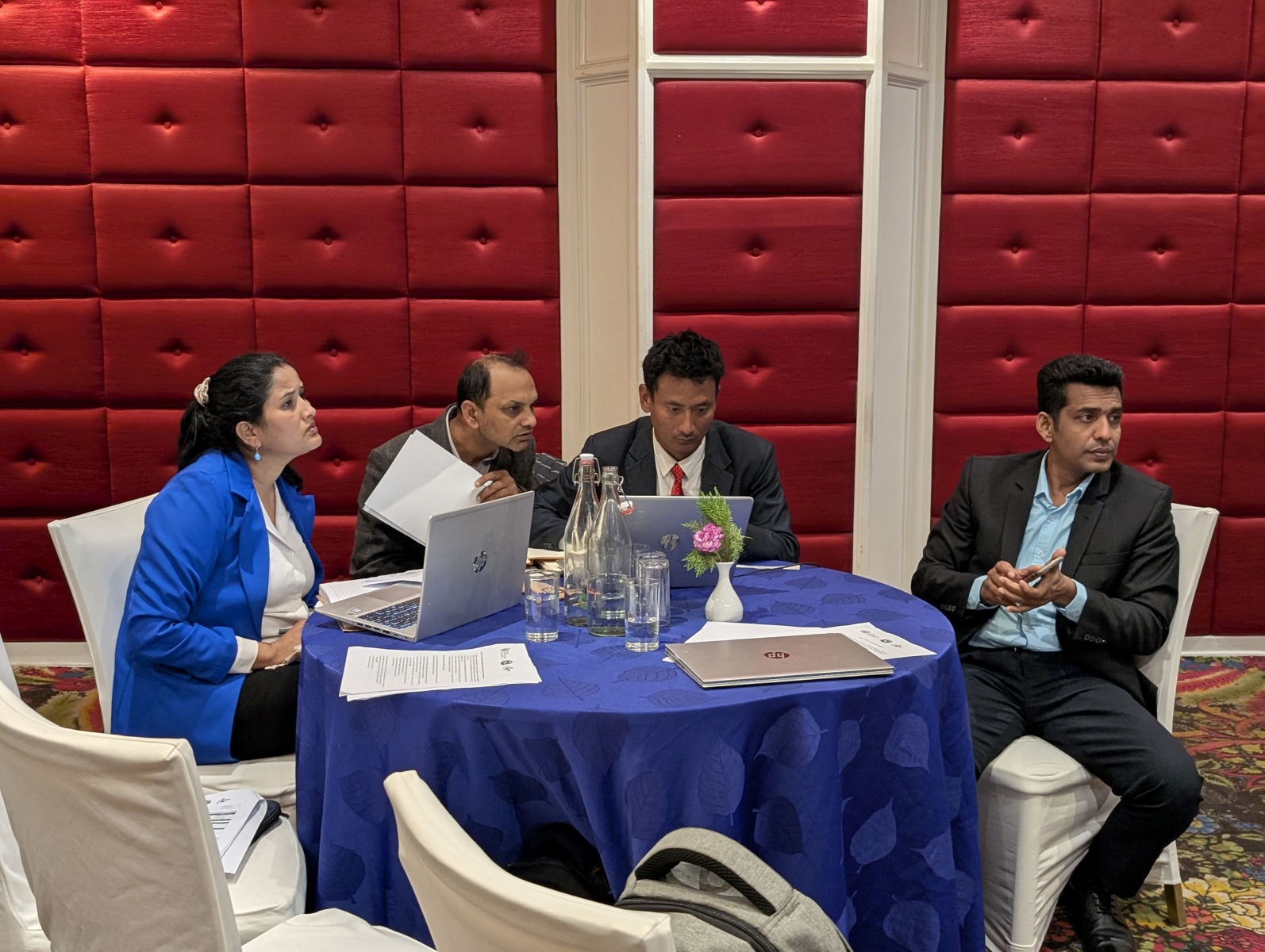
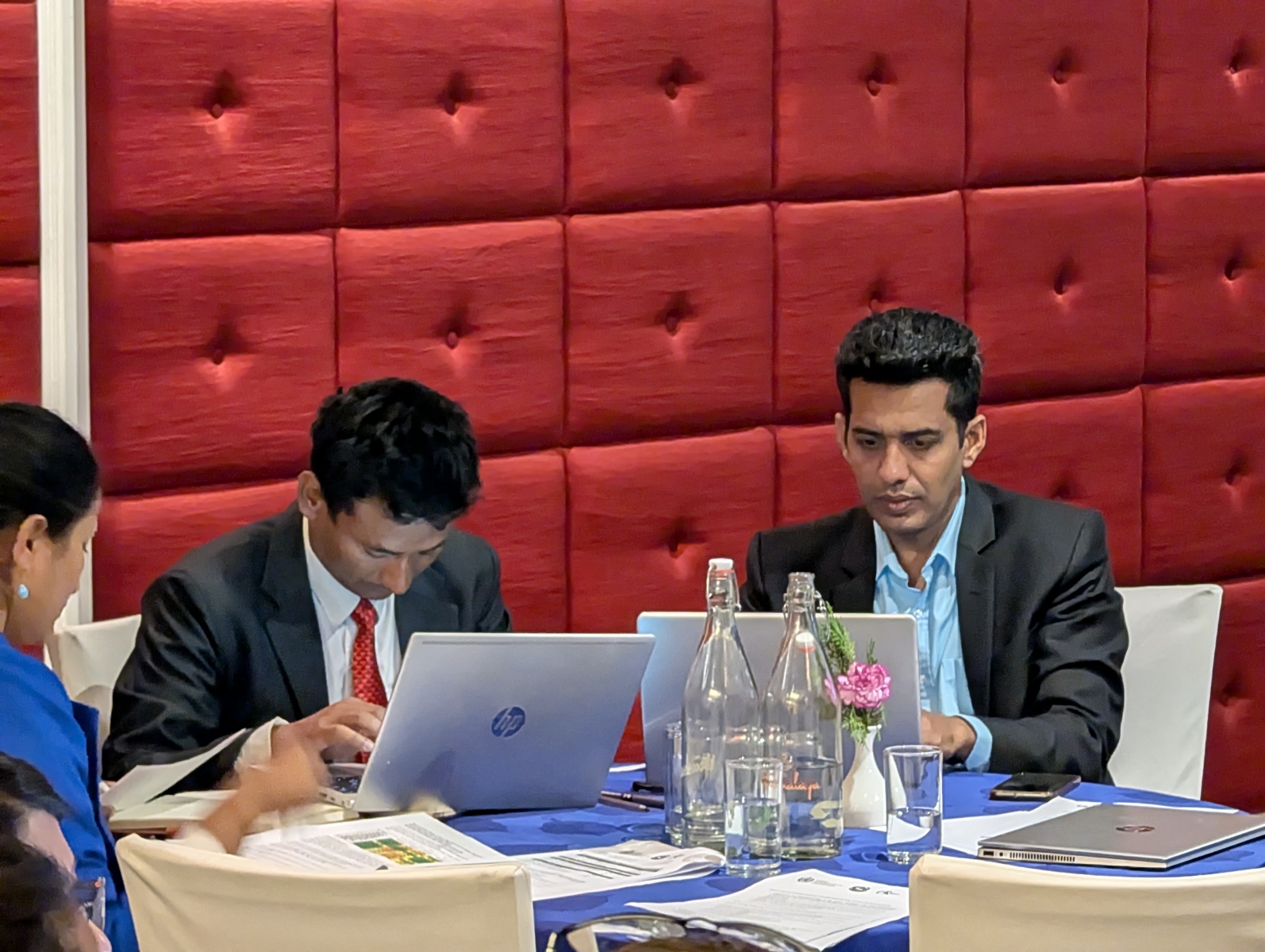
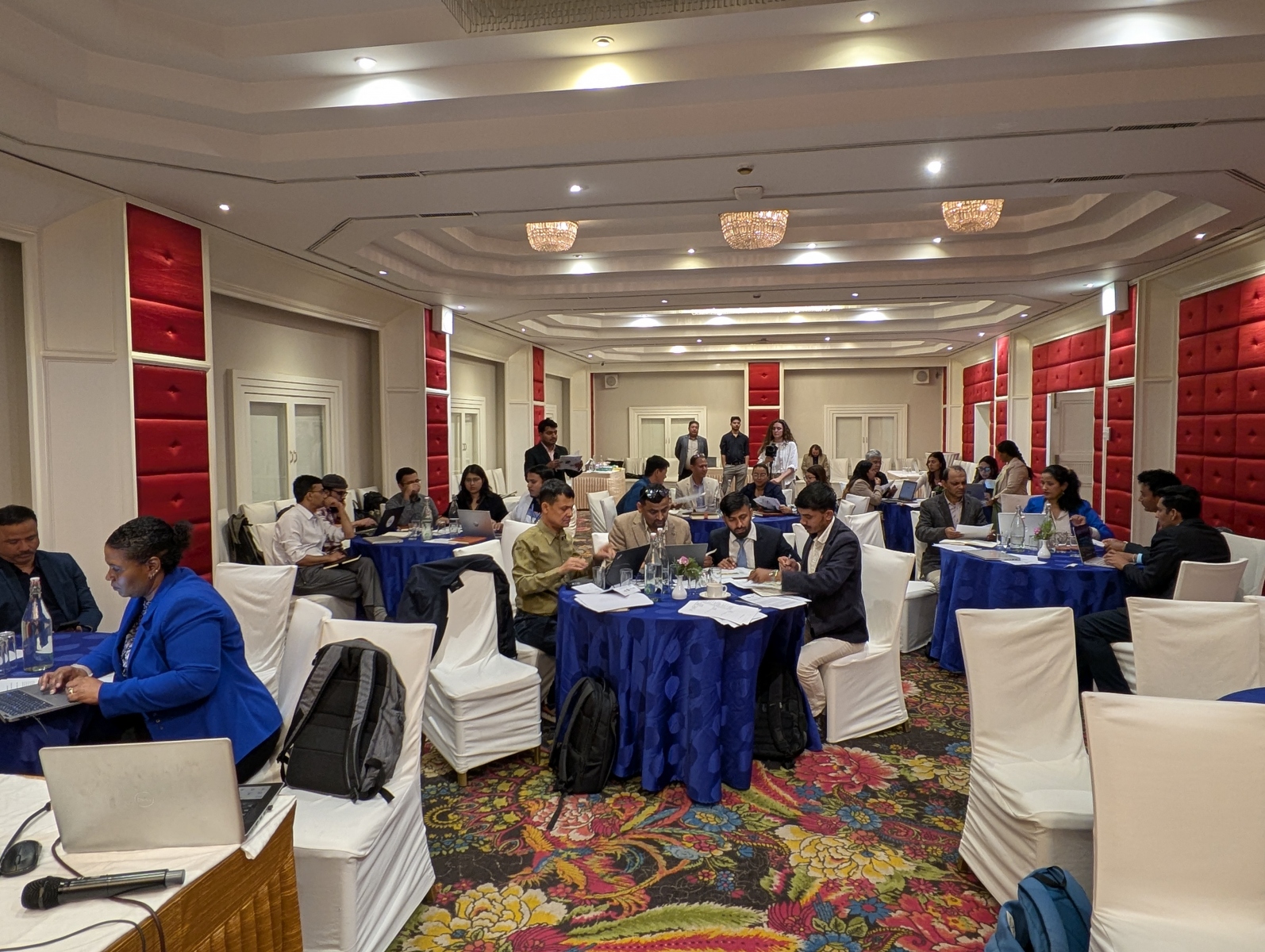
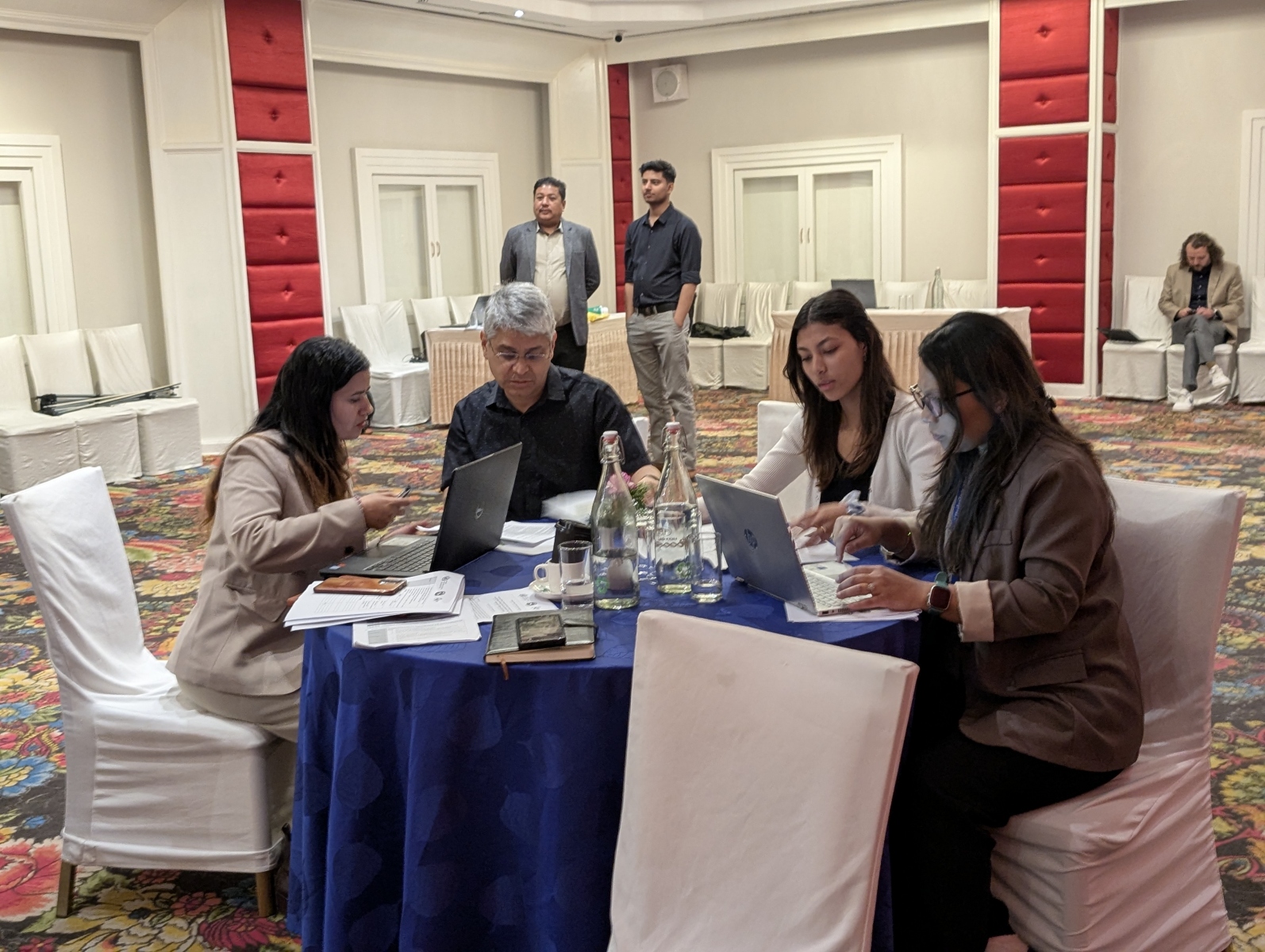
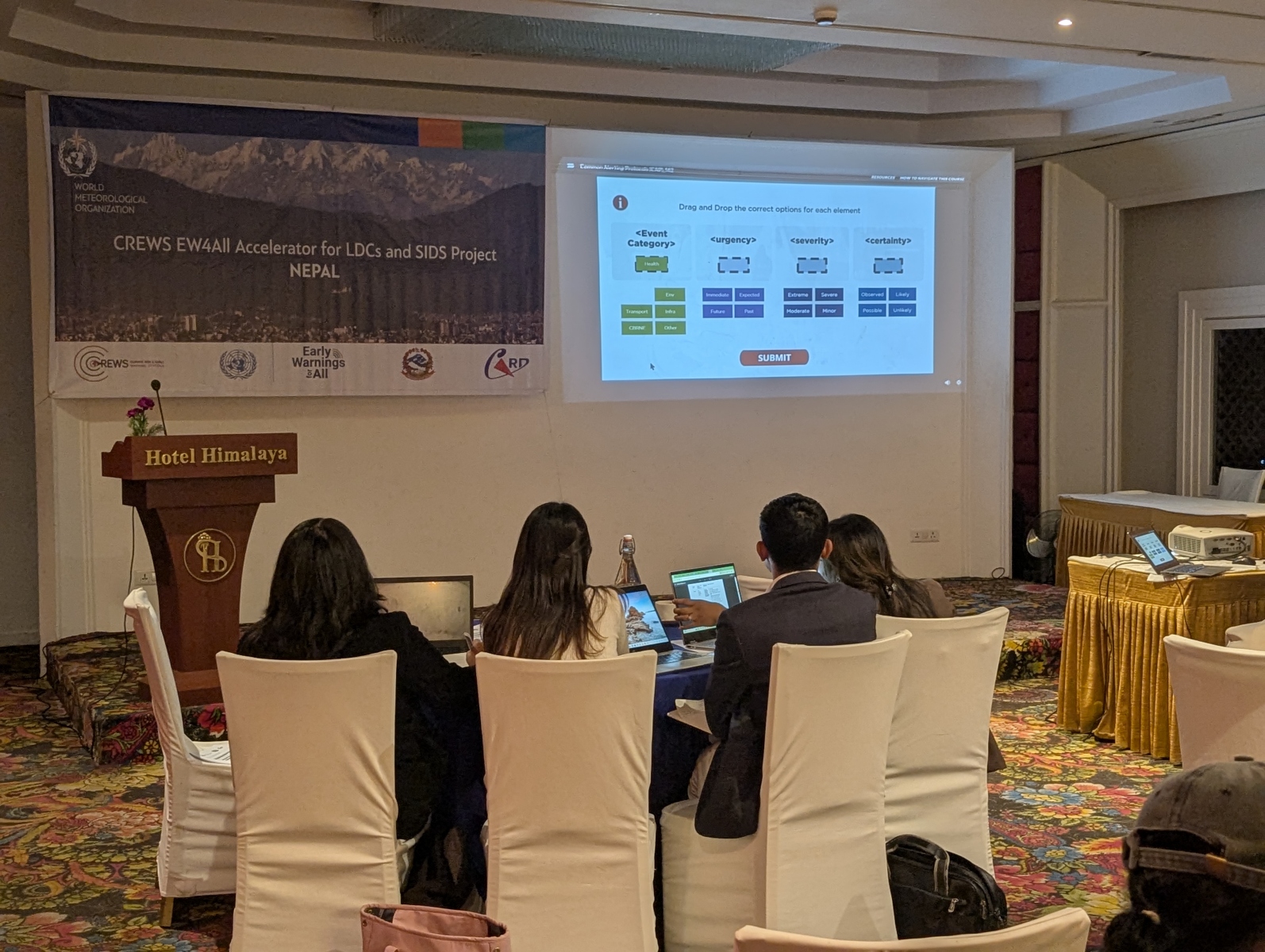
The aim of the workshop is to enhance knowledge and awareness of the CAP within the region and reinforce implementation through practical exercises. Participants will also be exposed to the fundamentals of Impact-based Forecast and Warning Services (IBFWS) to complement CAP. IBFWS combines meteorological data with local information on exposure and vulnerabilities to provide forecasts which focus on, ‘what the weather will do instead of what the weather will be’. The global implementation of CAP and IBFWS are key approaches promoted by WMO which support the implementation of the Early Warnings for All (EW4ALL) initiative.
CAP messages are rooted through the WMO Register of Alerting Authorities to recognize warnings coming from authoritative sources and these are displayed on the recently updated Severe Weather Information Centre (SWIC). These promote the success of the Global Multi-hazard Alert System (GMAS) which seeks to “increase and enhance the availability of authoritative warnings and information related to extreme and/or potentially high-impact weather, water and climate events – regionally and globally.”
Background
Nepal is highly susceptible to a variety of natural hazards due to its diverse topography and seismic activity. The country is frequently affected by earthquakes, given its location in a seismically active zone where the Indian and Eurasian tectonic plates meet. Landslides are a common occurrence, especially during the monsoon season, causing significant damage to infrastructure and loss of life. Flooding is another major hazard, with monsoon rains often leading to river overflows and flash floods. Additionally, Nepal experiences glacial lake outburst floods (GLOFs), which can result in catastrophic flooding downstream. These natural hazards underscore the need for comprehensive disaster risk management and preparedness strategies to safeguard Nepal's population and development progress. Also in Nepal, the implementation of CAP has been outlined a major priority and will be crucial in enhancing the countries disaster preparedness and response capabilities.
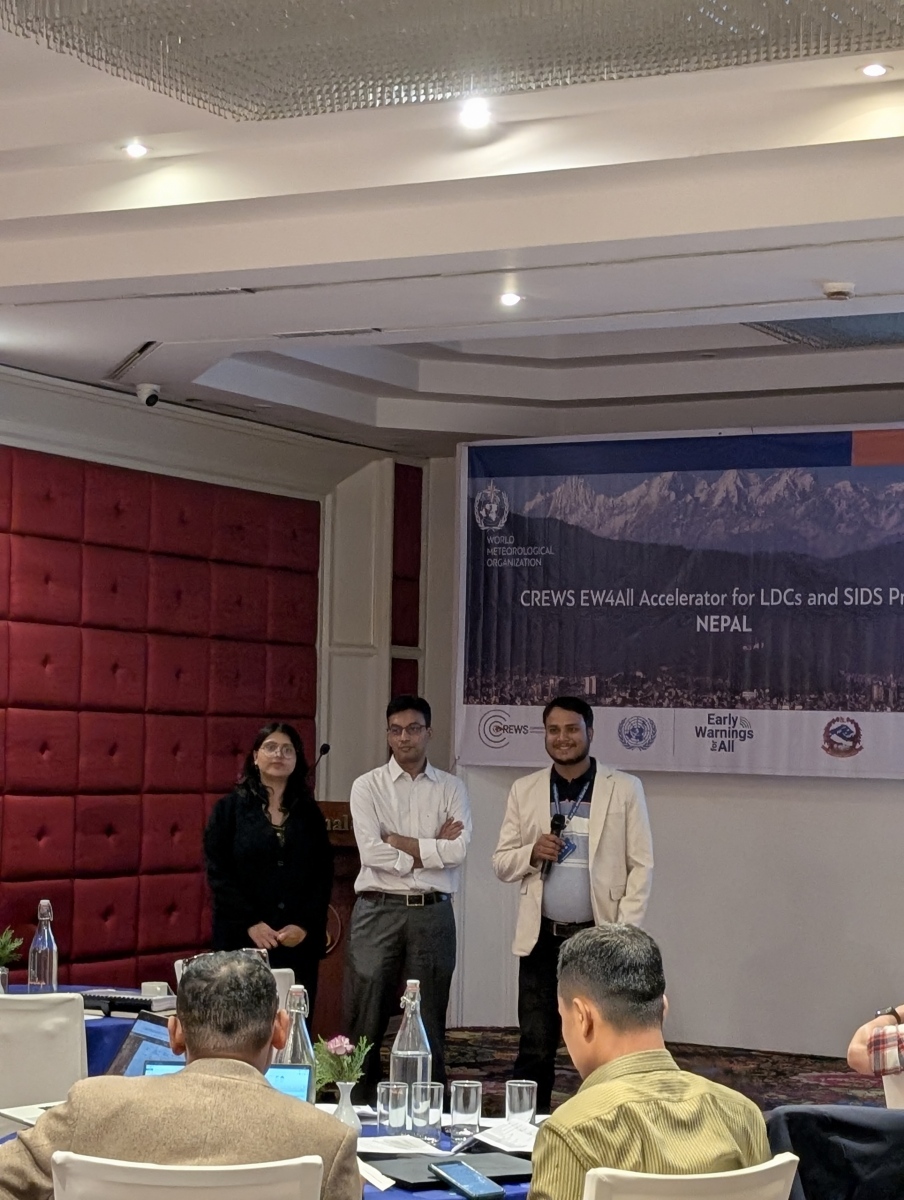
Activities will be supported through the CREWS funded EW4All Multi-Stakeholder Accelerator in LDCs and SIDS project. The workshop will further be co-developed with the support of the Department for Hydrology and Meteorology, with support from the Center for Applied Research and Development (CARD) to improve Nepal’s current early warning capacity in line with national development priorities.
The introduction of CAP will set the basis for activities that will later be implemented in the HydroSOS Bangladesh & Nepal project, currently under development and to be submitted to the Adaptation Fund.
Objectives of CAP Training
CAP experts from the India Meteorological Department (IMD) and India National Disaster Management Authority (NDMA) will support the training, sharing of good practices and lessons learnt. The following is an outline of the anticipated training which will be tailored and adapted for the country context and based on the training approach and resources of the WMO, the IMD and the NDMA. As a part of the EW4All initiative, the International Telecommunication Union (ITU) and the International Federation of Red Cross and Red Crescent Societies (IFRC) will also support training sharing information on CAP message dissemination and actionable messaging.
Agenda
|
Day 1 |
||
|
Time |
Details |
Responsible |
|
08:00-09:00 |
Registration |
DHM/CARD |
|
09:00-09:20 |
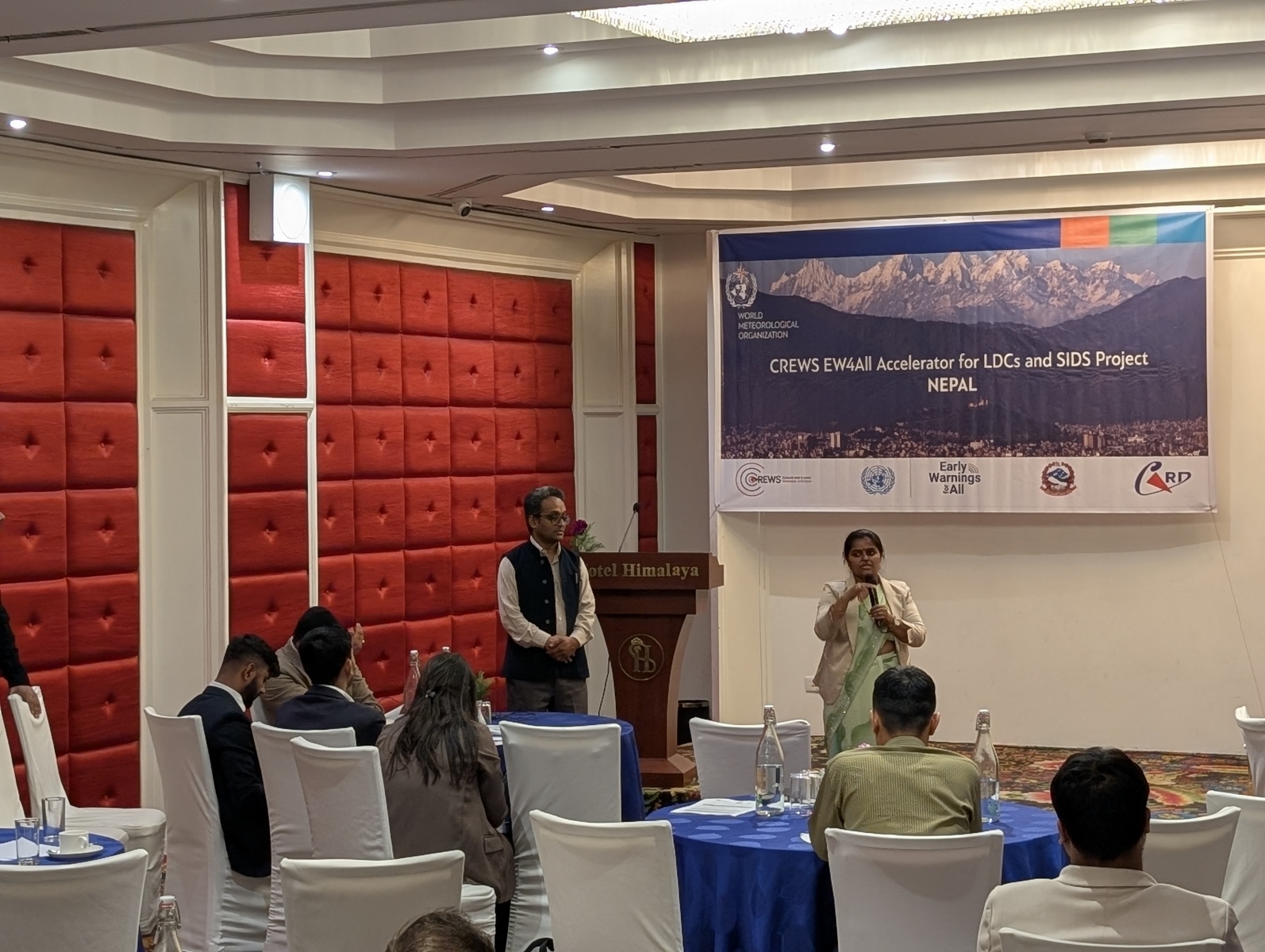
Welcome and Opening Remarks
|
WMO, DHM, IOE |
|
09:20-09:35 |
Workshop overview and Introductions & Overview of the CREWS EW4ALL Project initiative |
All |
|
09:35-09:50 |
Introduction Center for Applied Research and Development - IOE and related initiatives |
CARD |
|
09:50-10:15 |
Introduction to the Common Alerting Protocol (CAP), the WMO Register of Alerting Authorities and the Severe Weather Information System (SWIC) |
WMO |
|
10:15-10:45 |
Group Photo and Coffee Break |
|
|
10:45-11:00 |
Presentation on the status of early warnings in the country |
DHM |
|
11:00-11:35 |
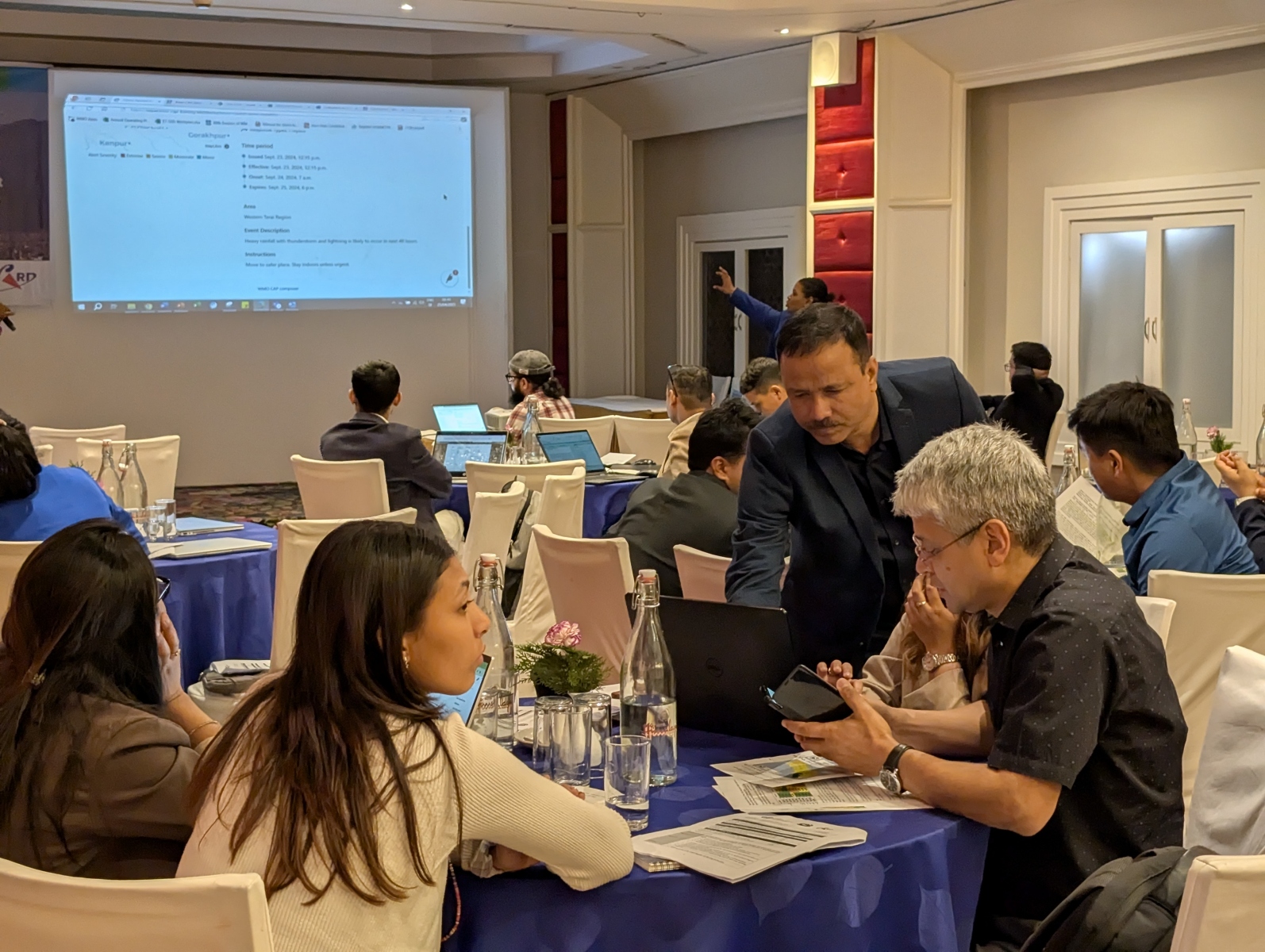
Sharing of good practices and CAP implementation experiences including steps for CAP implementation |
IMD, NDMA |
|
11:35-12:00 |
Introduction to Impact-based forecast and warning services (IBFWS) |
WMO, IFRC |
|
12:00-12:30 |
Sharing of good practices and case study on CAP and IBFWS |
IMD, NDMA |
|
12:30-13:30 |
Lunch |
|
|
13:30-13:45 |
Elevator Pitch for promotion of CAP |
WMO |
|
13:45-15:00 |
Exercise and discussion: Preparation of elevator pitch |
Participants |
|
1500-1515 |
Coffee Break |
|
|
15:15-16:15 |
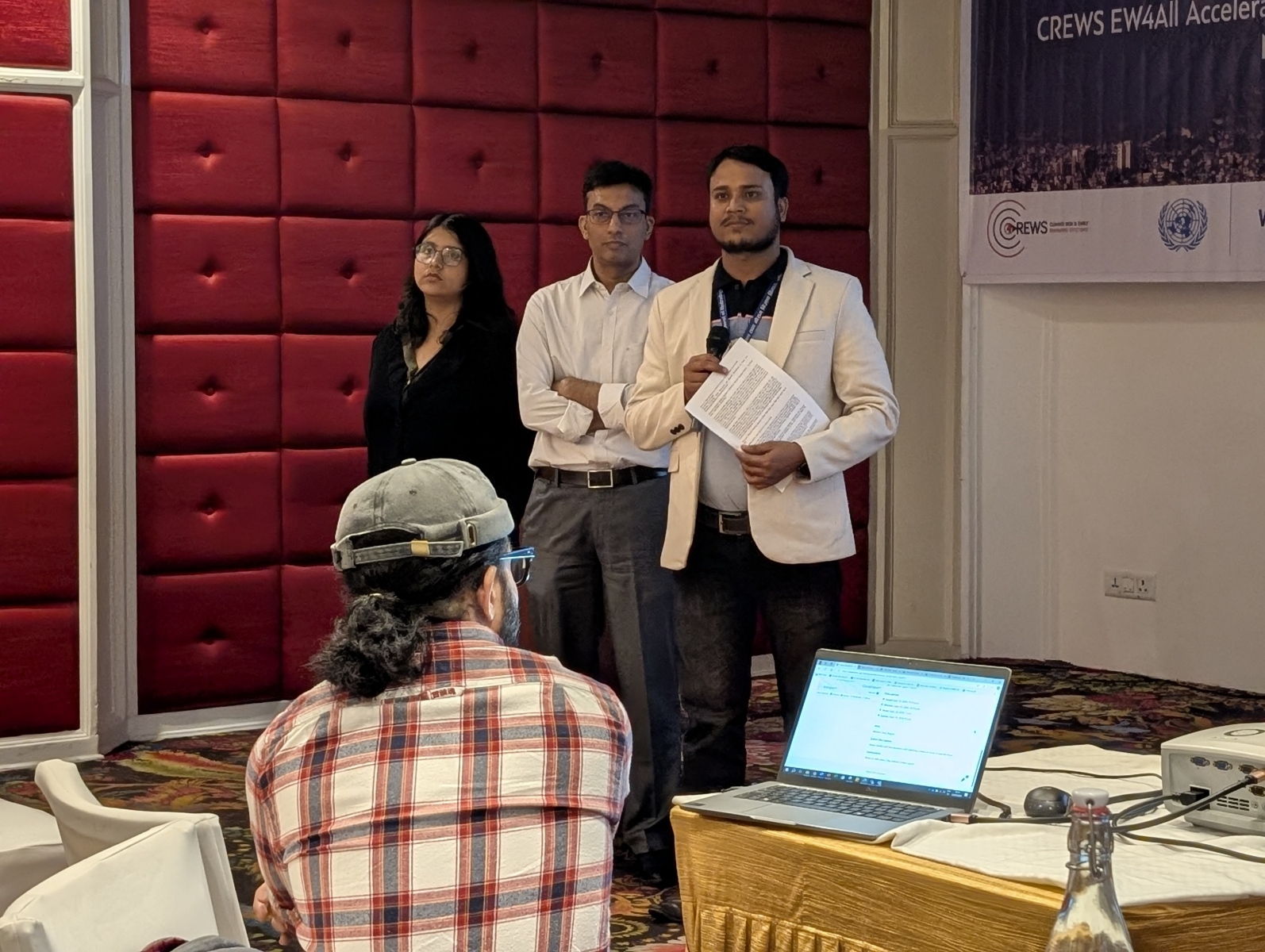
Presentation of elevator pitch |
Participants |
|
16:15-16:30 |
Conclusions and end of Day 1 |
Participants |
|
|
||
|
|
||
|
Day 2 |
||
|
Time |
Details |
Responsible |
|
09:00-09:15 |
Welcome and Recap |
WMO |
|
09:15-10:15 |
Details on the elements of the CAP standard |
WMO, IMD |
|
10:15-10:30 |
Introduction to the CAP editing tool |
WMO, IMD |
|
10:30-10:45 |
Coffee Break |
|
|
10:45-12:30 |
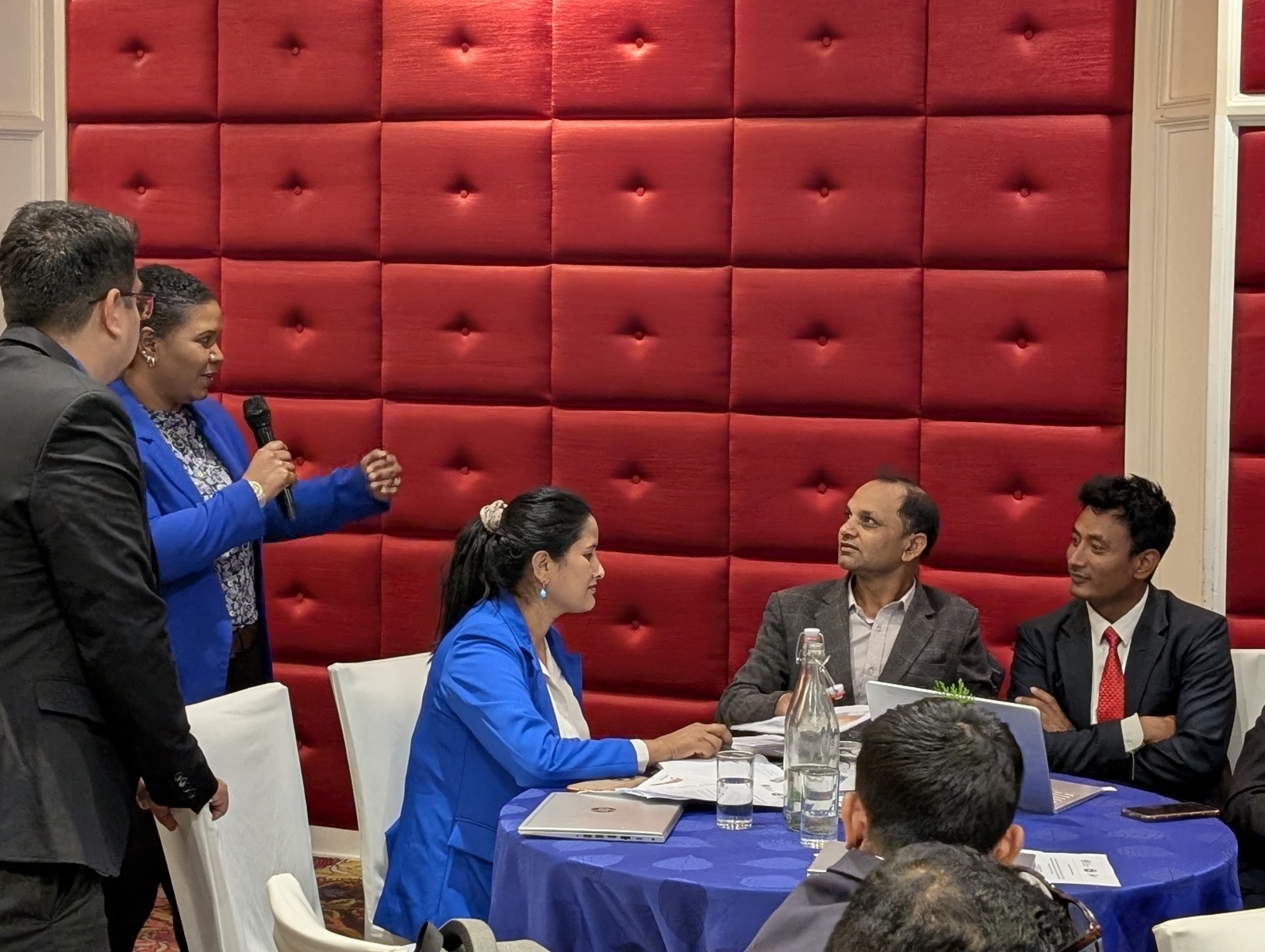
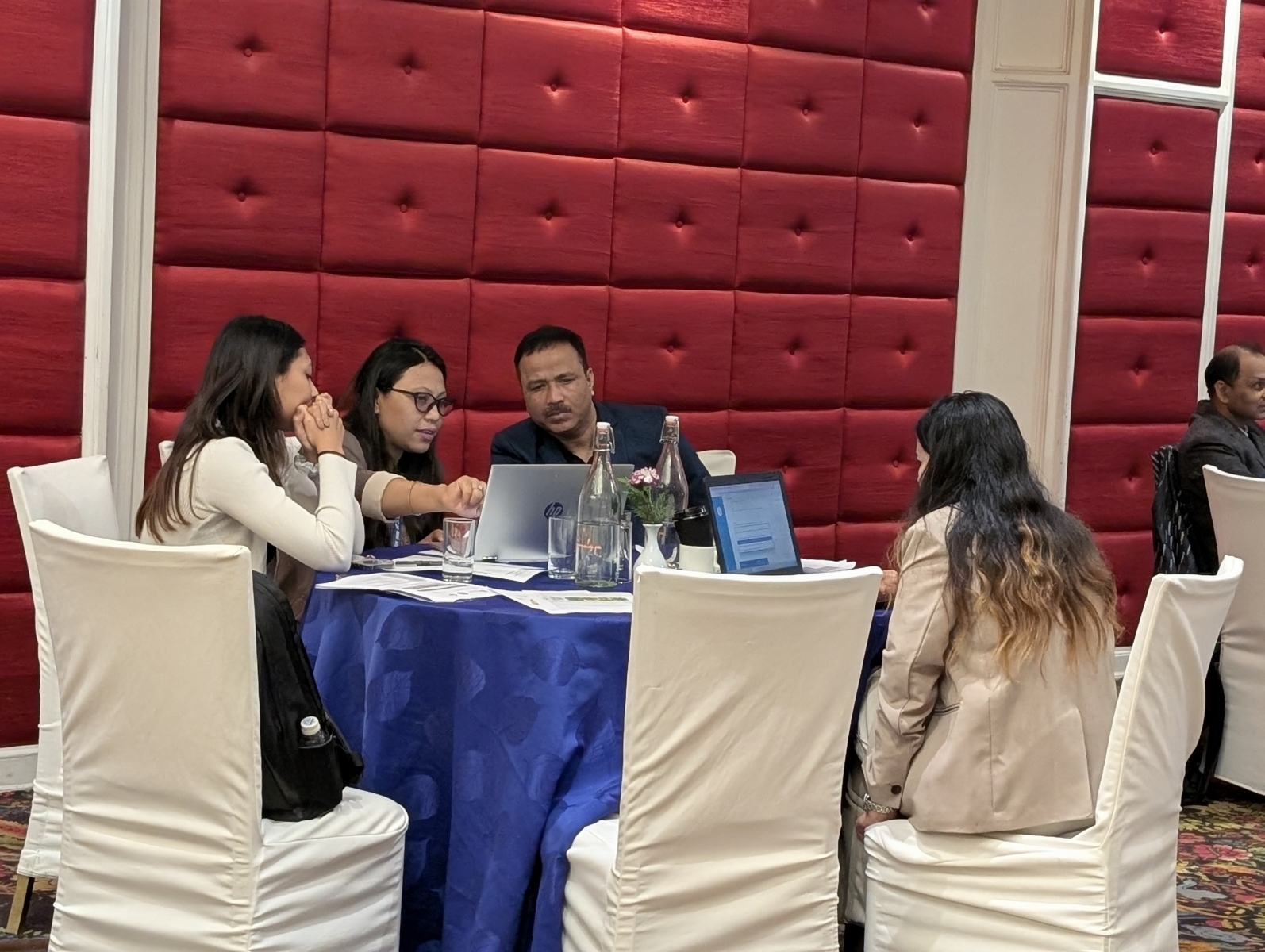
Exercises and discussions on formatting alerts into CAP |
IMD |
|
12:30-13:30 |
Lunch |
|
|
13:30-14:00 |
Exercises and discussions on formatting alerts into CAP |
All |
|
14:00-14:30 |
Presentation & discussion on formatting alerts into CAP |
All |
|
14:30-15:00 |
Dissemination of CAP alerts |
ITU |
|
15:00-15:15 |
Coffee Break |
|
|
15:15-15:45 |
CAP Implementation Plan |
DHM |
|
15:45-16:00 |
Discussion on next steps and evaluation |
All |
|
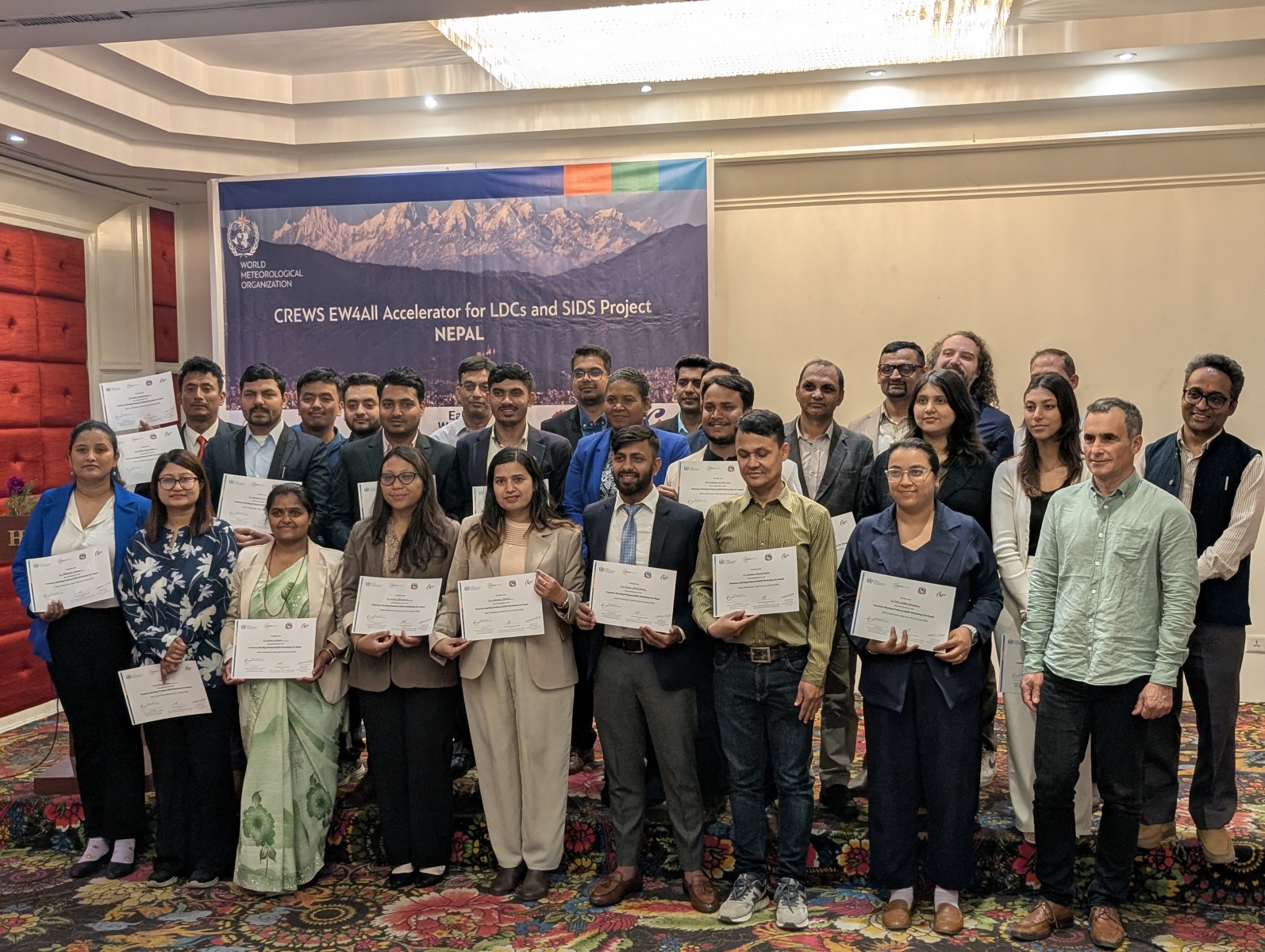
16:00-16:30 |
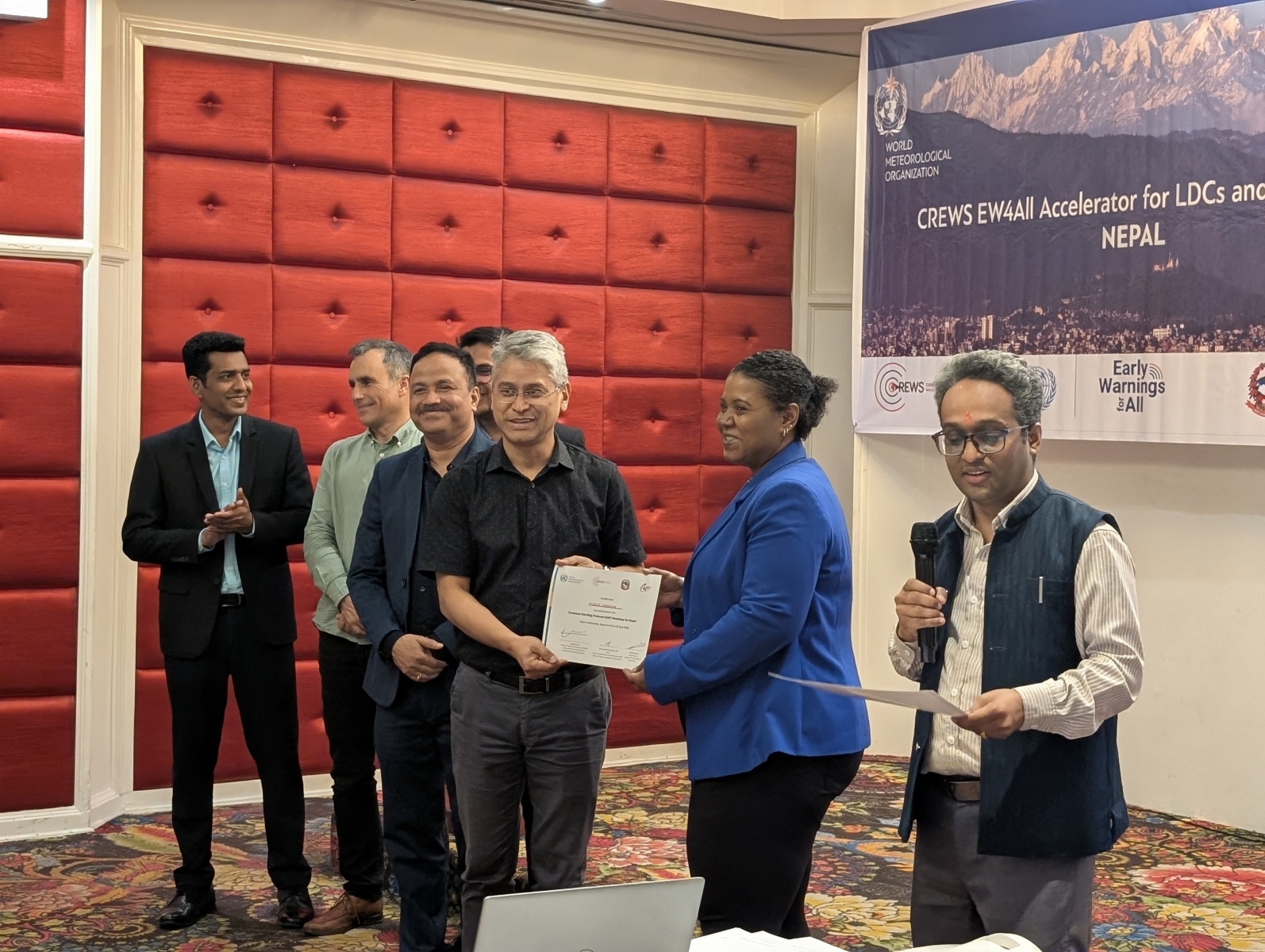
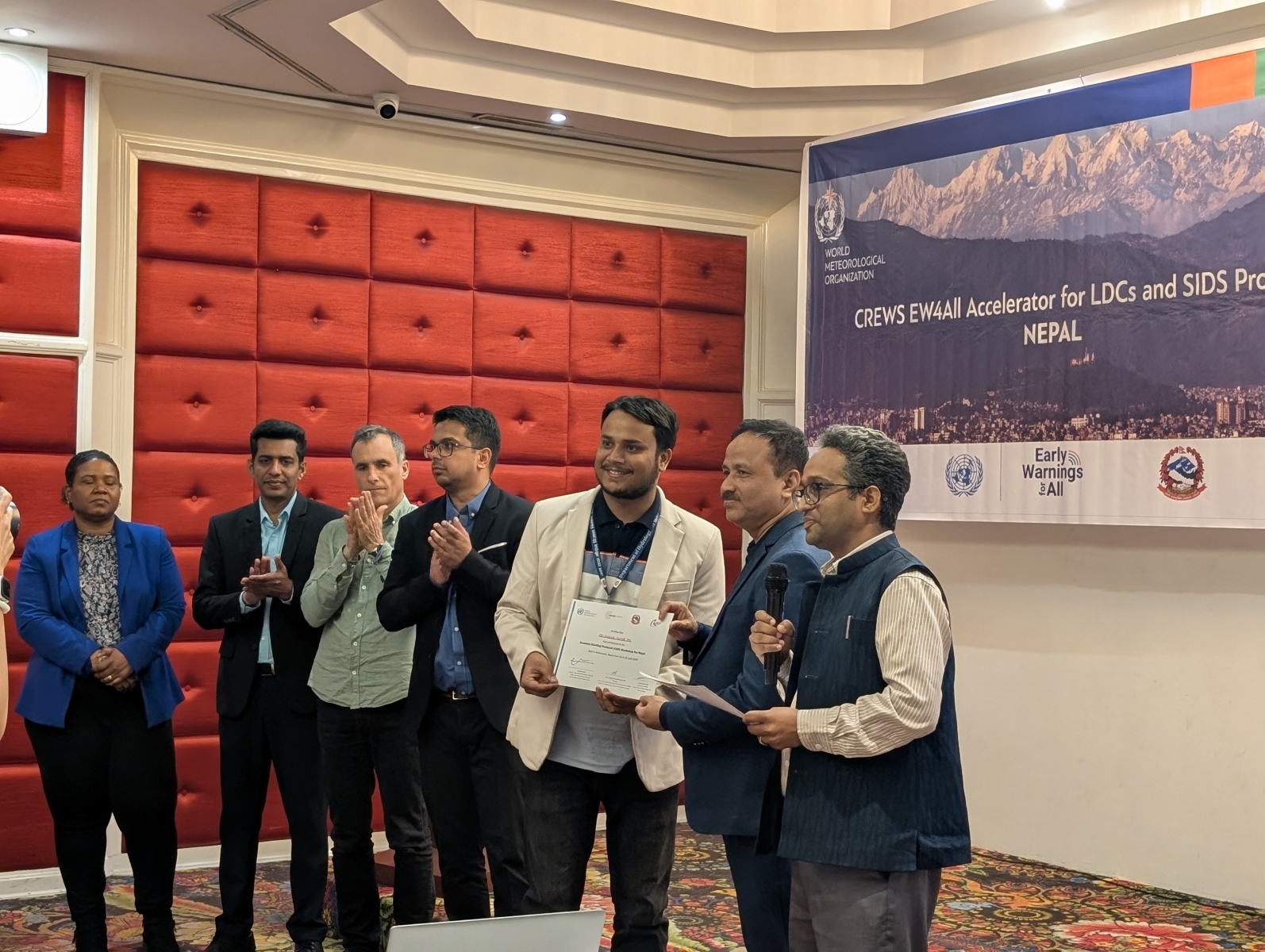
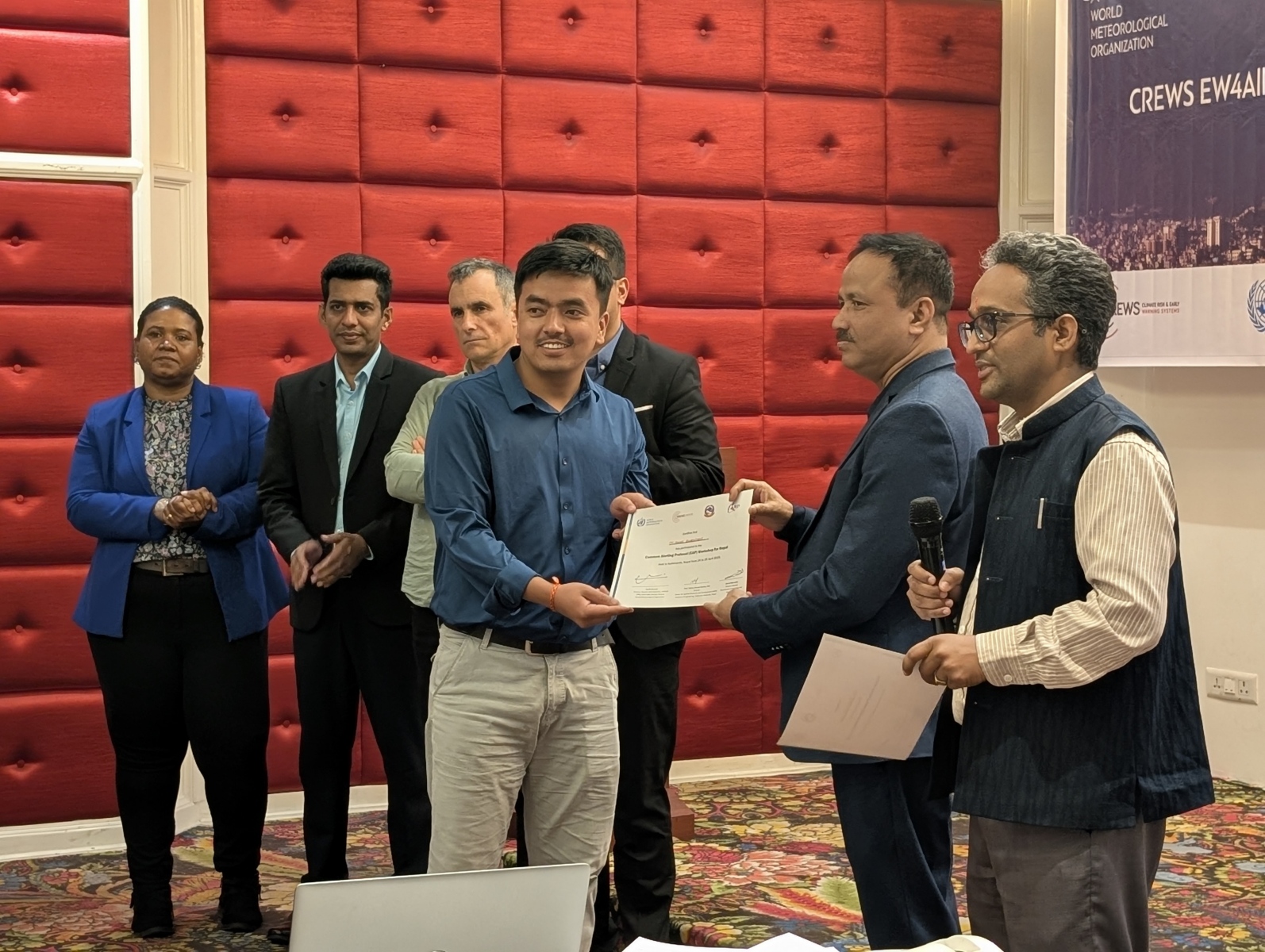
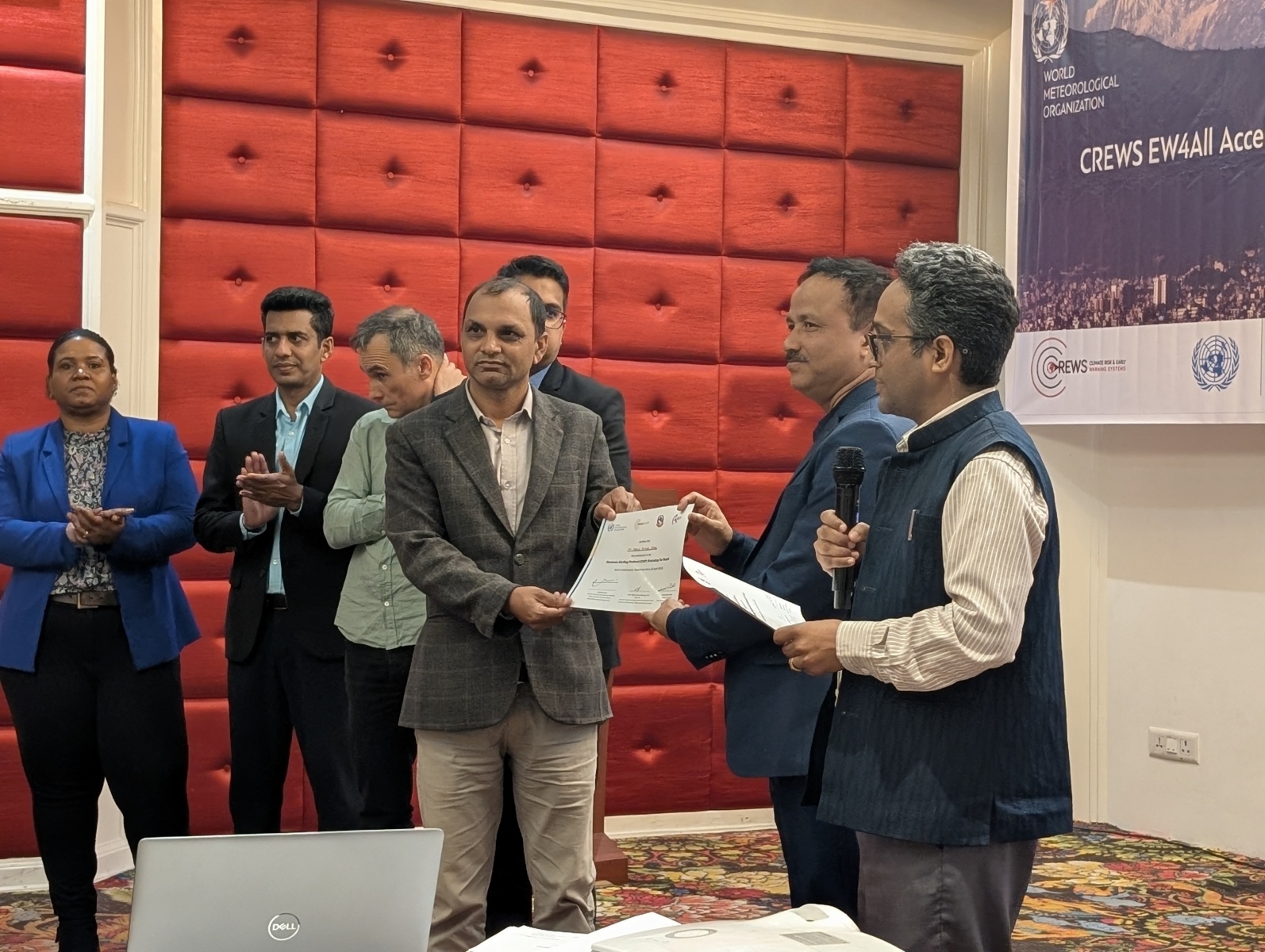
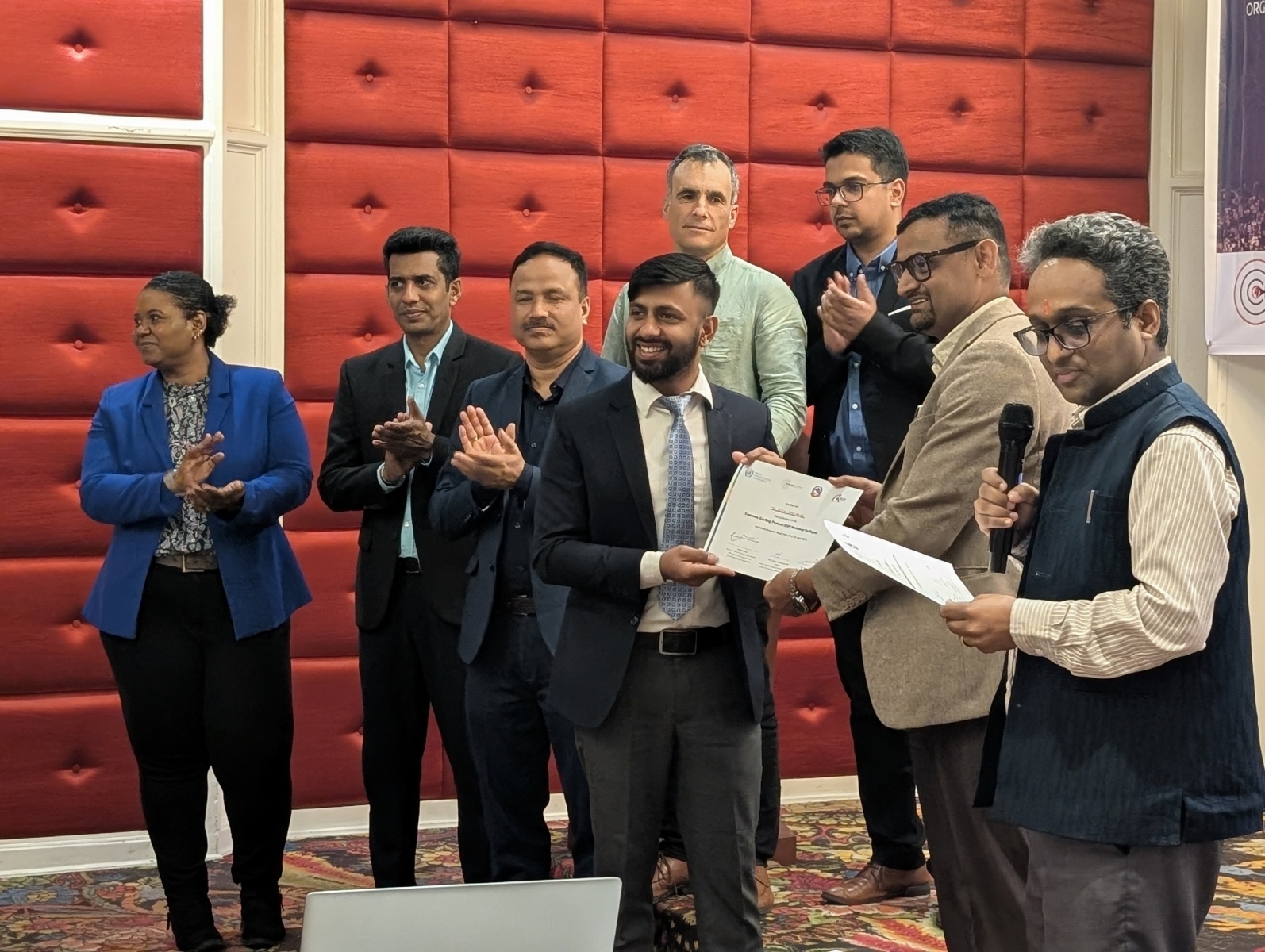
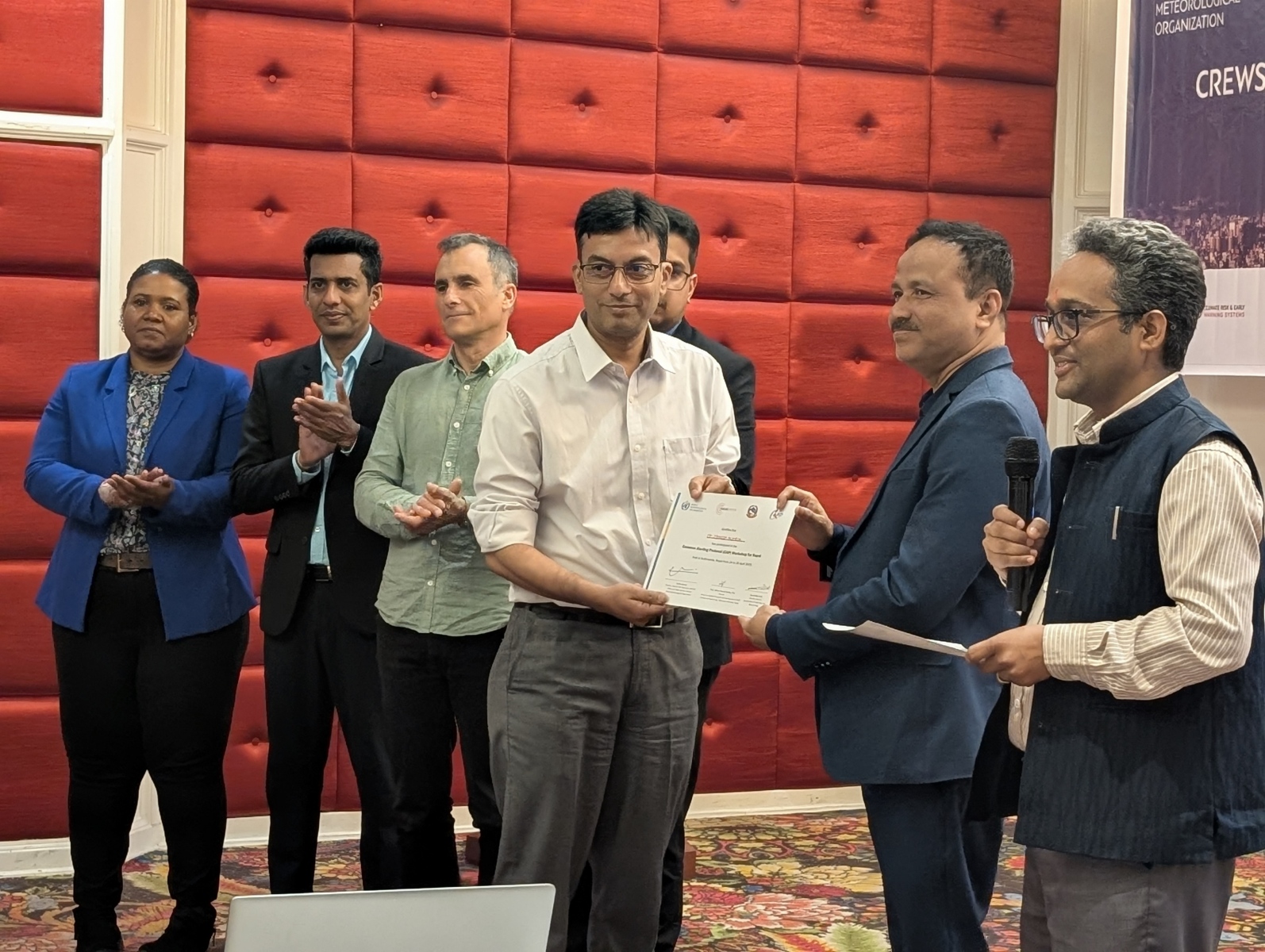
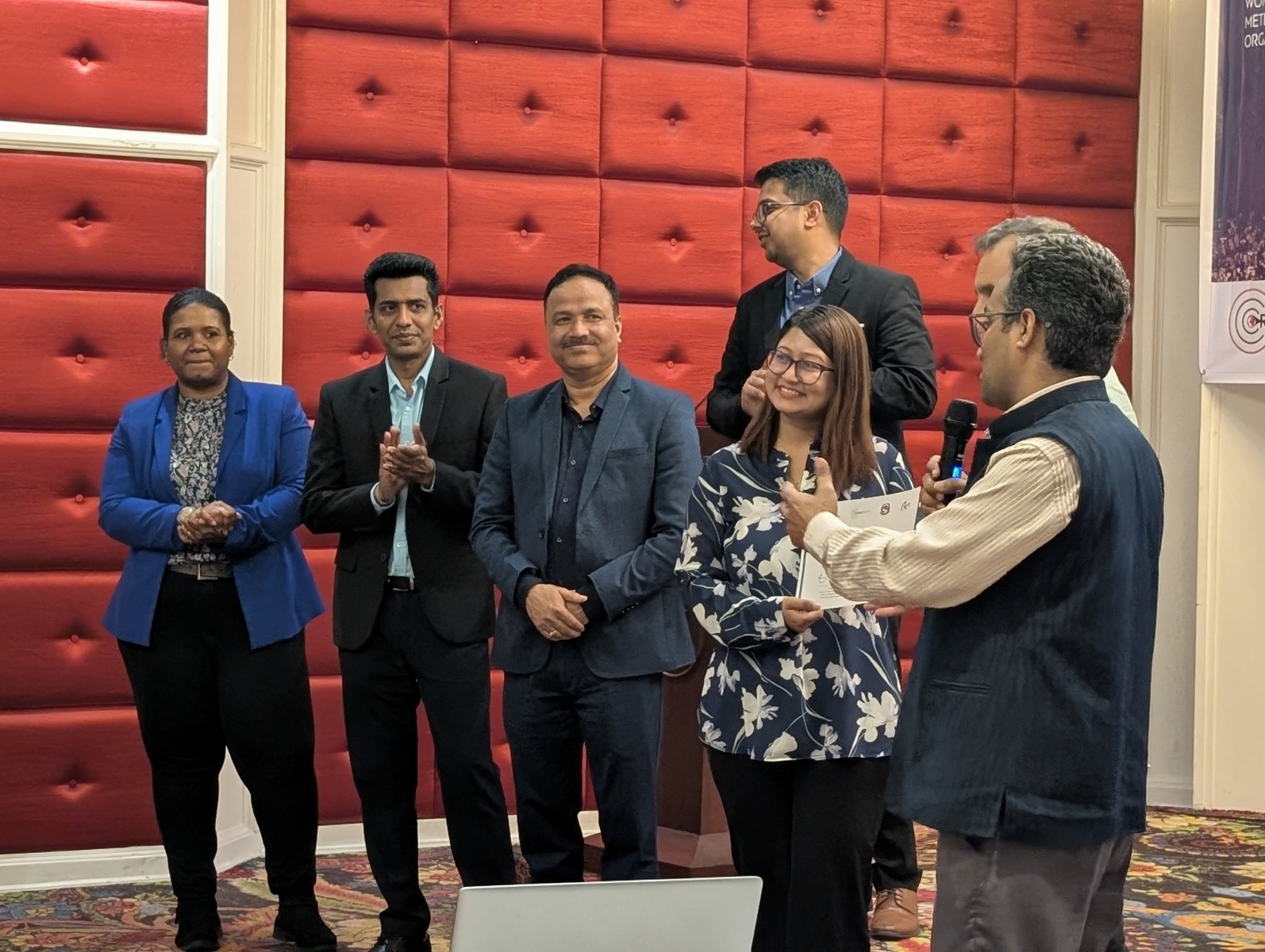
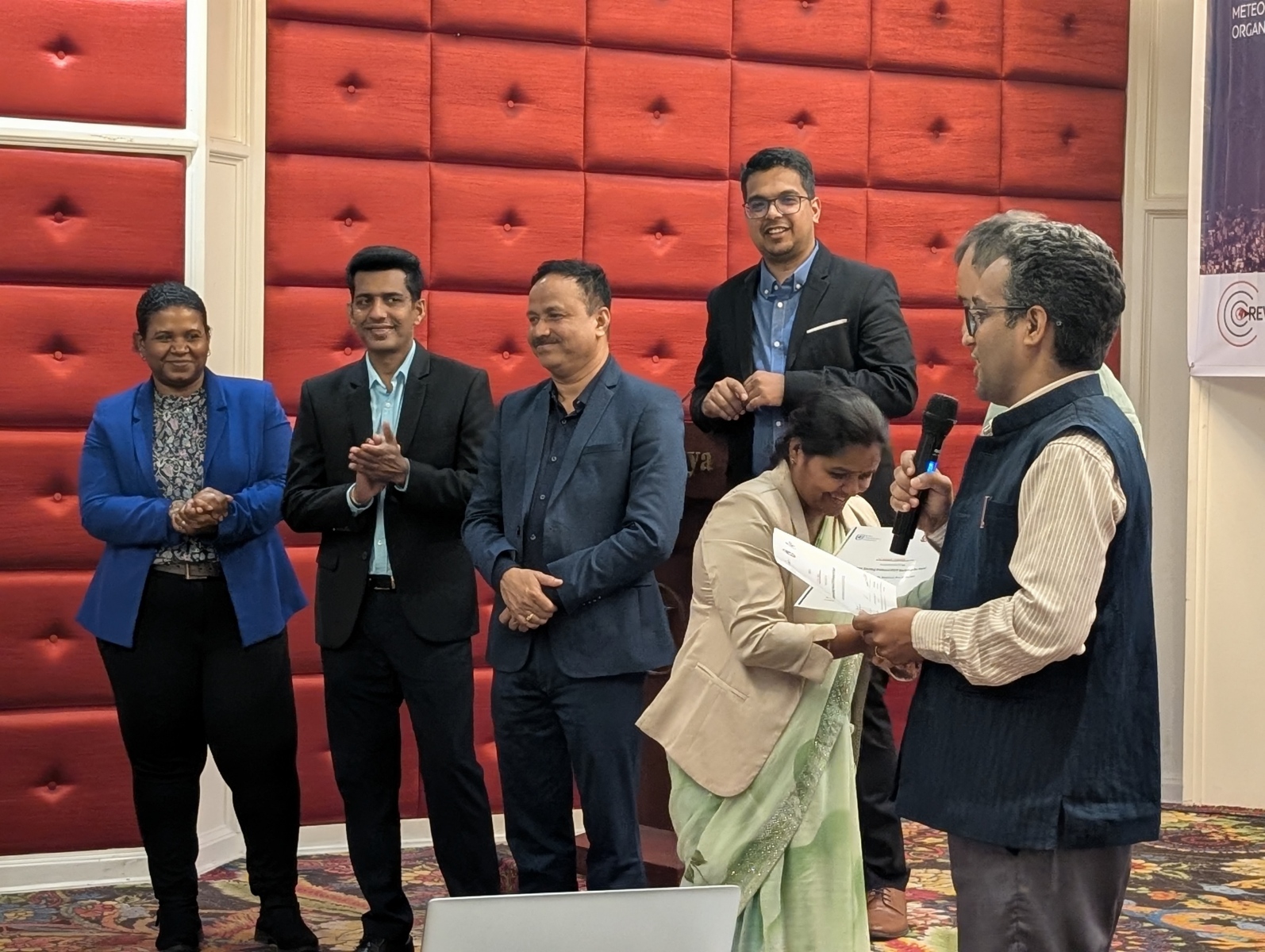
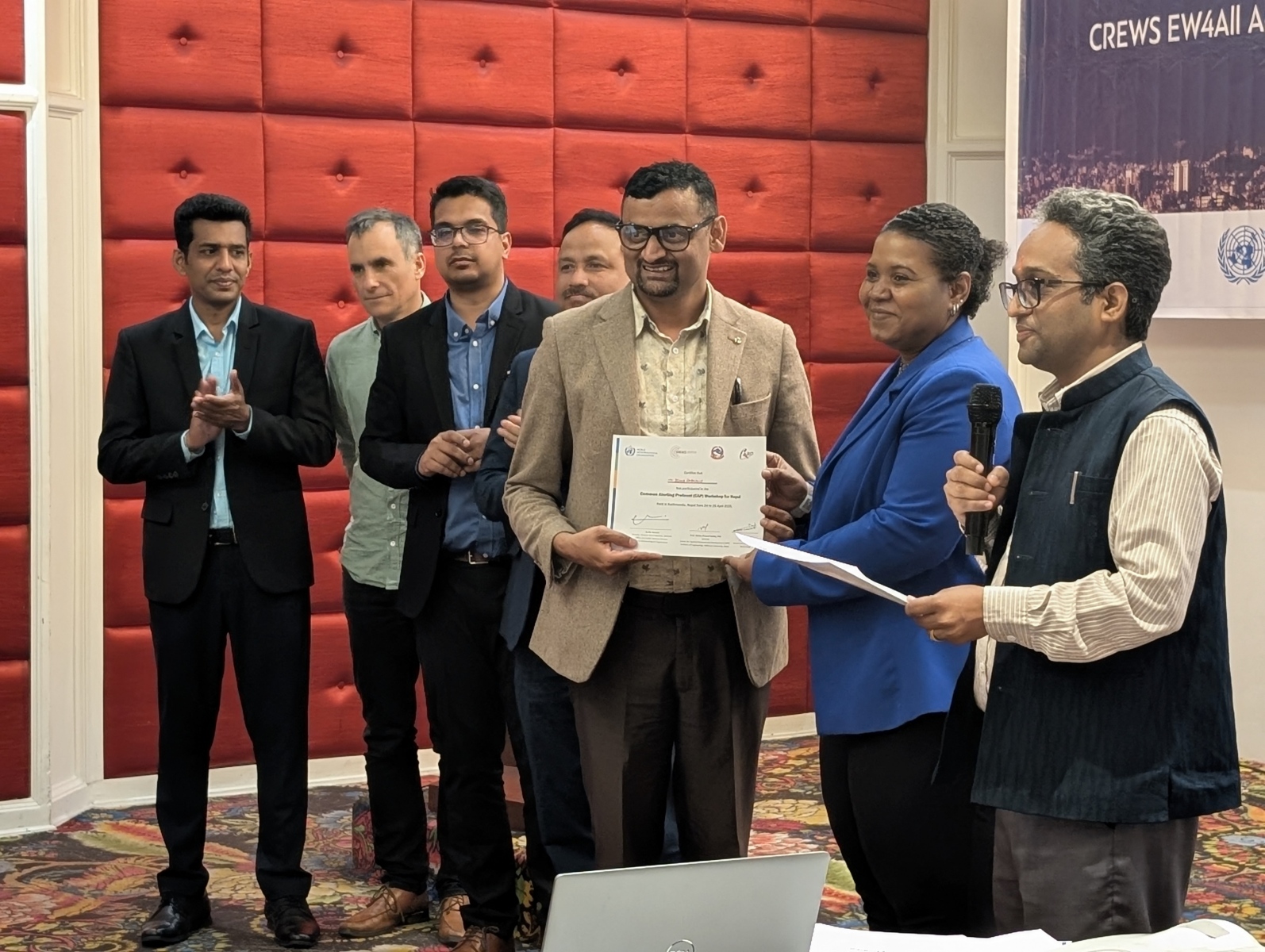
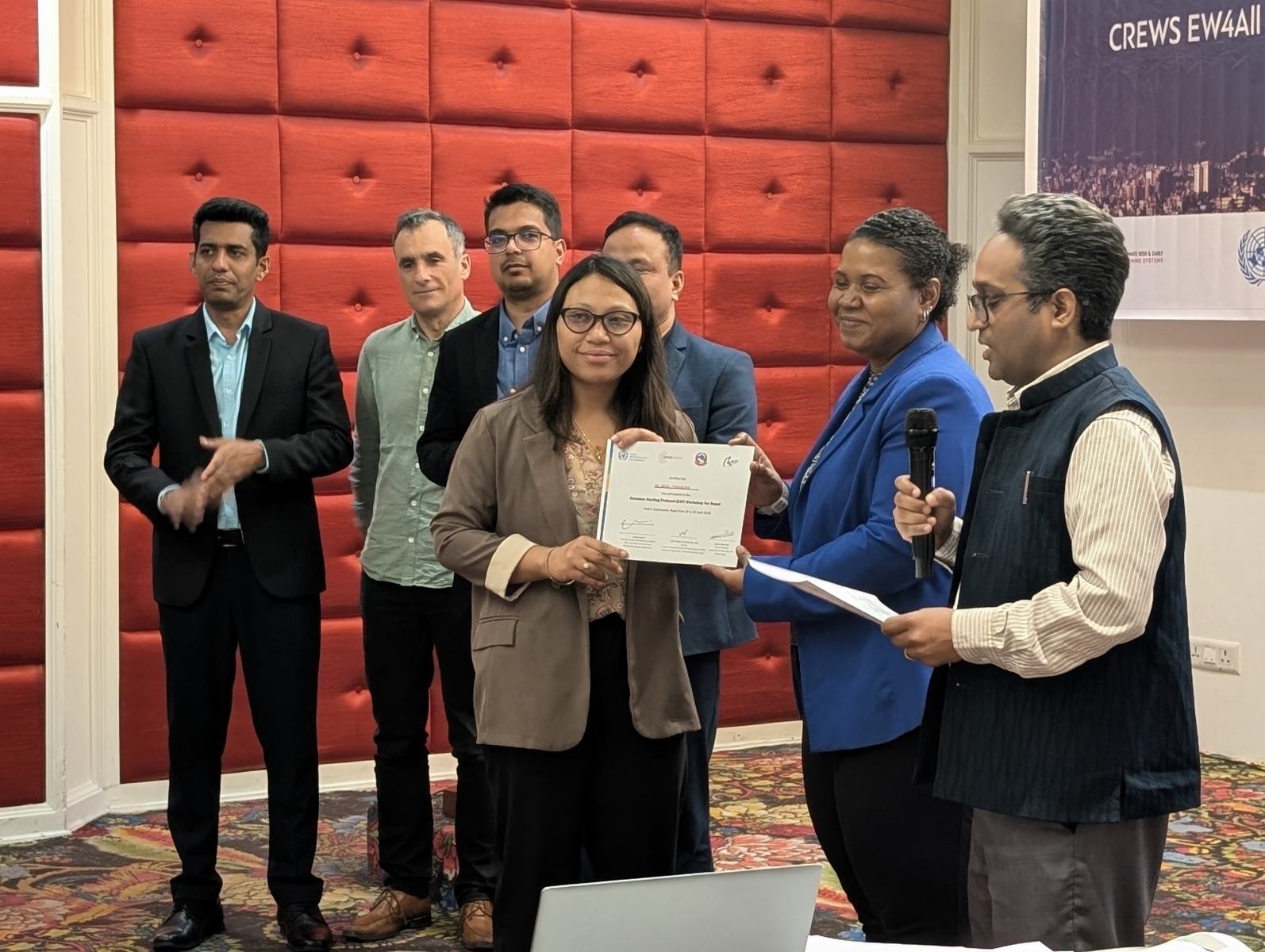
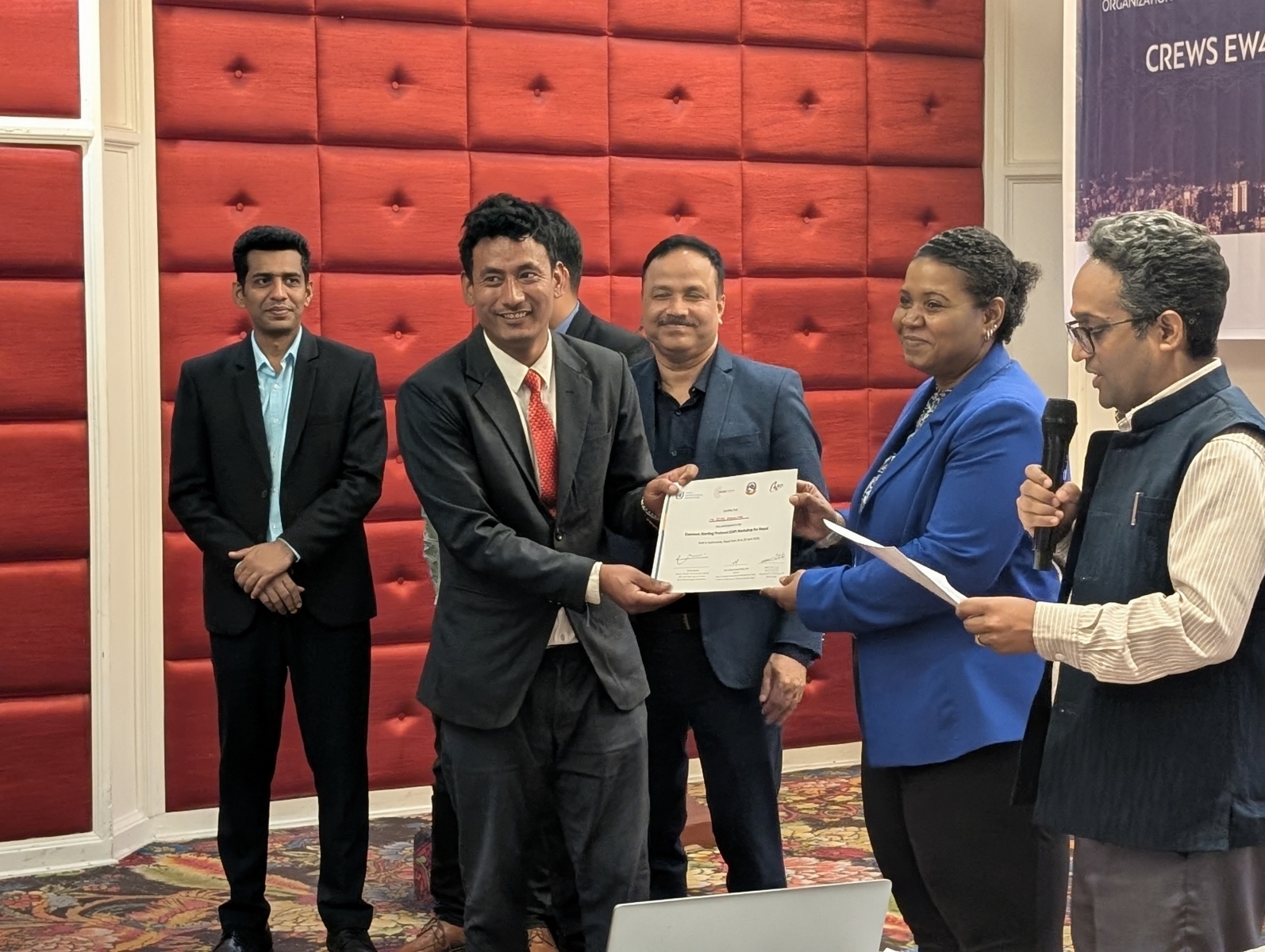
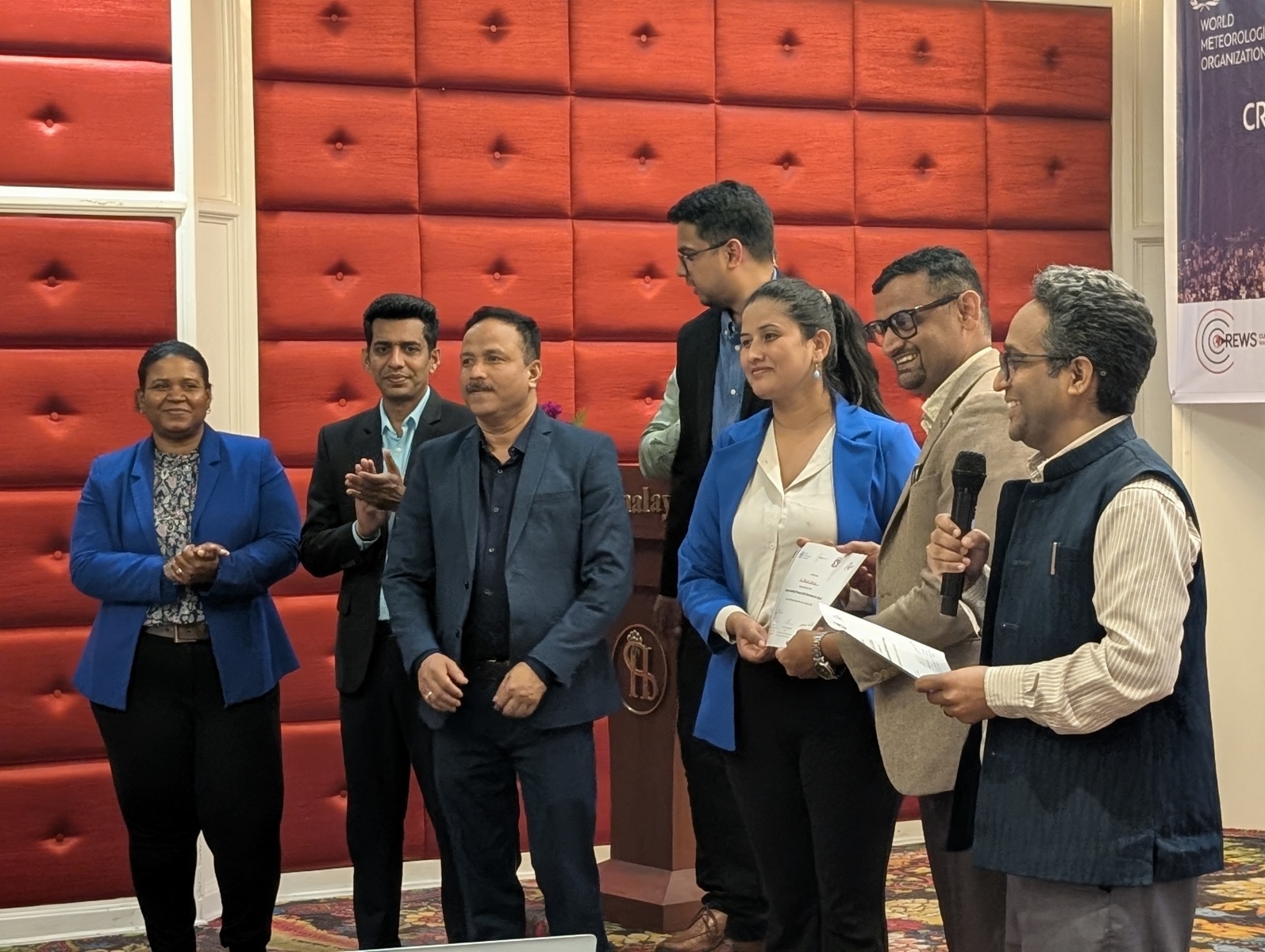
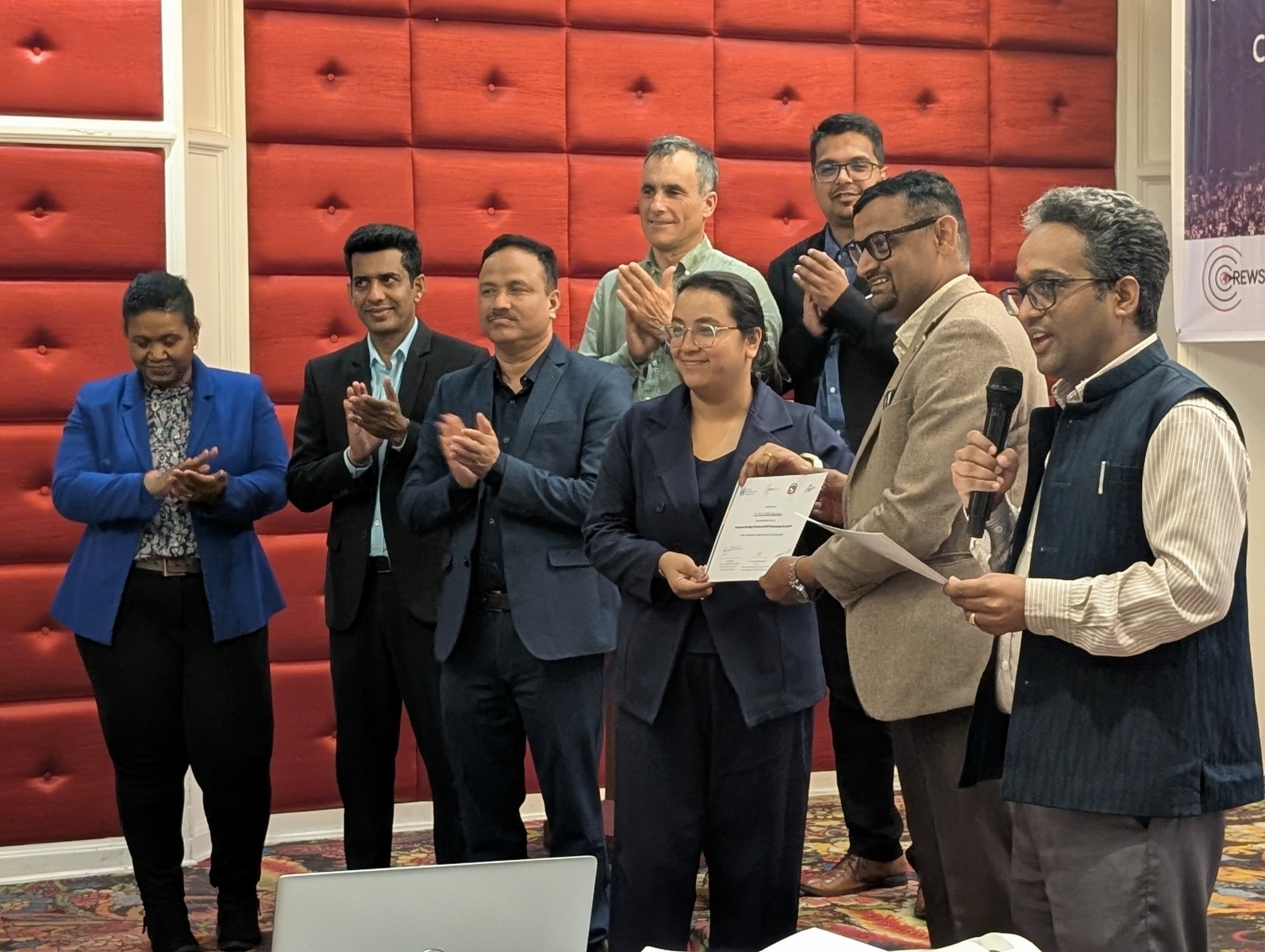
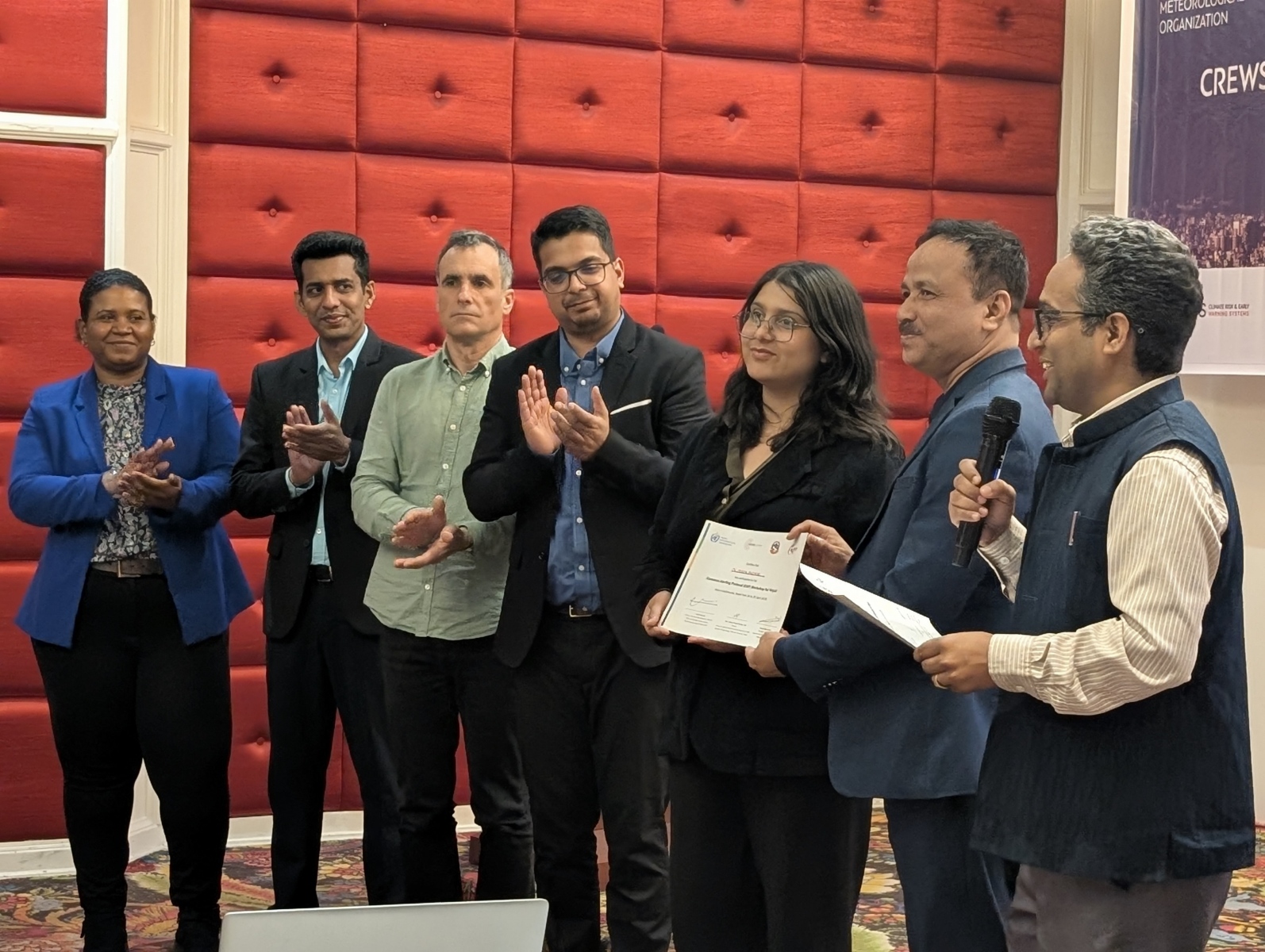
Presentation of certificates and Closing remarks |
DHM |
Results Framework
|
Impact |
Increased National and Community Resilience through improved early warning communications capacity to mitigate the impacts of disasters in Bangladesh and Nepal |
||
|
Objectives |
|
||
|
Outcomes |
|
||
|
Outputs |
|
||
|
Activities |
|
||
|
Key Performance Indicators |
Indicator |
Baseline |
Target |
|
# of CAP implementation teams initiated
|
0 |
Draft ToR prepared |
|
|
# of CAP implementation plans developed
|
0 |
Draft action plan prepared |
|
|
% increase in competence in CAP
|
Mean star rating from registration survey |
50% increase in participants competence |
|
|
# of SOPs |
0 |
At least one SOP developed (NMHS & NDRMO) |
|